Monday, 1 October 2018

Red Hydrogen One: What we know so far (Update: RAM/storage revealed) https://ift.tt/2rwSCTU
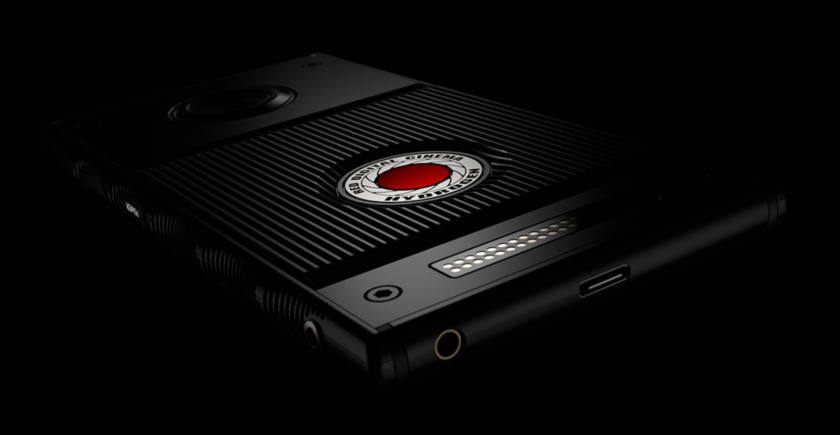
Update, October 1, 2018 (09:10AM ET): We’re roughly a month away from the Hydrogen One’s network launch, but there are still a few lingering questions. Now, Google’s Android Enterprise website has revealed a few answers.
The website’s Hydrogen One listing shows that the phone will offer 6GB of RAM and 128GB of storage. This should be enough for most consumers, but the device’s multimedia focus means you should probably get a microSD card (or regularly back up your content).
Read: Best Android smartphone cameras (August 2018)
Red’s phone will also be equipped with an NFC chip and Android 8.1. Hopefully the company quickly brings Android Pie to the handset.
We’re still waiting for more Hydrogen One details to emerge, such as the camera specs. Hopefully we get this information sooner rather than later.
What we know currently about the Red Hydrogen One
We first heard about the Red Hydrogen One back in January. Ever since, news of the ambitious and innovative new smartphone from Red, an American company well known for its professional cinema cameras, had been dripping out slowly.
A few months ago, CNET and The Verge got to go hands-on at Red Hollywood Studios, giving us a look at the Red Hydrogen One, but not the display. Turns out, it isn’t so much a screen but a holographic display.
There is no way to describe or show the 4 view (4V) display other than seeing it in person. There’s just no way.
Said Red founder and CEO Jim Jannard, speaking to the crowd gathered in Hollywood to see the phone.
Display: “4 View” is at least half the pitch
First of all, Red Hydrogen One isn’t a smartphone in the conventional sense. It’s described as one part of a range of cameras and specially created media that can display via a multi-dimensional display. It’s not a totally new concept in the mobile space. The Amazon Fire Phone offered a 3D display experience criticized for being both bad and without purpose. The LG Optimus 3D and the HTC EVO 3D offered something similar in 2011. They might’ve been too early, with limited viewing angles and depth of field. The Nintendo 3DS also did 3D earlier, though CNET claims the Red Hydrogen One does it better.

The 3D effect worked in real-time via video calling, which surprises
CNET was pretty bullish on the “4 View” display actually, describing it as adding depth to a normal 2D display. That might be expected when watching pre-produced clips from movies, but it apparently even worked when video calling someone, using Skype or Messenger or what have you — the live image also had the 3D effect. Some trolls called it a high-res Nintendo 3DS, which is probably not all that far from the truth, but being able to capture footage or stream it live could be cool — at least if both parties own a Red Hydrogen One to see it.
The screen will be a 5.7-inch LCD display with a 2560 x 1440 resolution. The Verge mentioned a layer beneath the LCD display that can “direct light in multiple directions instead of the standard two that happen with lenticular displays.” That’s where the depth comes from.
Design: Robust is putting it mildly
The Red’s design philosophy is all over this Android smartphone, so think industrial. It’s not a petite thing, described as like an iPhone in an Otterbox, and it has various metal fins over it for grip. The edges have a wavy shape for better grip. Sticking with that industrial style, Red is offering it either aluminum (preorder price: $1,195) or titanium (preorder price: $1,595). We don’t think you’ll need a case for it, at least — it’s a pretty chunky device.

The design is modular in nature, with connector pins on the back to snap in modules. While we’ve seen that more or less fail in the past, the phone will be part of Red’s existing ecosystem, rather than one that doesn’t exist yet, like with Essential. It appears the one module Red will start with is a bolt-on giant image sensor that allows DSLR size-factors and has connectors for Red’s other cameras, along with lens mounts for existing professional lenses from the likes of Canon, Nikon, Leica, and so on. There may be more modules down the line.
Read next: Here’s how LG V30’s camera compares with $50,000 RED Weapon
The phone can apparently be plugged into existing Red cameras such as the Epic-W or Red Weapon as part of the display. Peter Jackson used a Red camera rig to film The Hobbit trilogy, just so you know.
Specs: Not great, but not the focus
We know it will be an Android smartphone powered by a Qualcomm Snapdragon 835, which was the top of the line last year. There are also stereo speakers, a USB-C connector, hybrid SIM tray (dual-SIM or SIM and microSD card), a headphone jack, support for all four U.S. carriers (h/t: Droid Life), and a hefty 4,500mAh battery (confirmed by an FCC listing). It will also, intriguingly, have the fingerprint sensor on the side connected to the power button.
What we don’t know is a much longer list. RAM, internal storage, Android OS, sensors, and so on, are a mystery for now. We saw Phil Holland, a Director in LA, release a shot of the front display at least, although of course, not on:

Phil Holland/PHFX.com
The aforementioned FCC listing also shows off the front, along with a few more images. Check it out below.


We also don’t know much about the camera. We know it can shoot video for the Red Hydrogen One display via a front-facing two-lens setup, as well as normal 2D shots and video as well. Given it’s Red, we expect something decent, though the full power will likely be unlocked by adding professional lenses. Aspects like megapixels and pixel size, along with the quality of the provided dual rear-cameras, and details for things like f-stops, OIS, focusing methods, built-in flash, bokeh mode, and so on, are unknown. The same goes for the front dual camera as well.
What we expect from the Red Hydrogen One
What we don’t expect is a bestseller that will climb to the top of Android charts. It’s too expensive for that, running at $1,195 for an aluminum preorder or $1,595 for titanium. A first device has a long way to go to generate any significant momentum, even as a niche product in the movie-making business.
We’re hoping for a device that might give 3D displays a fresh life, after the disaster that was the Fire Phone. It’s pretty rare that something radically different enters the smartphone market, but the Red Hydrogen One might just be that. Part of the problem is you won’t know if it’s good until you see it yourself.
The phone has seen several delays, but it looks like you’ll soon be able to get your hands on it. Red confirmed that the aluminum model is being shipped to pre-order customers from October 9, while AT&T, Verizon, and Mexico’s Telcel will stock the device from November 2. Unfortunately, those who pre-ordered the titanium model will have to wait even longer — at least you’re getting a free aluminum Hydrogen One for the inconvenience.
from Android Authority https://ift.tt/2sgvc28
More Red Hydrogen One specs leak ahead of launch https://ift.tt/2rN9qUi
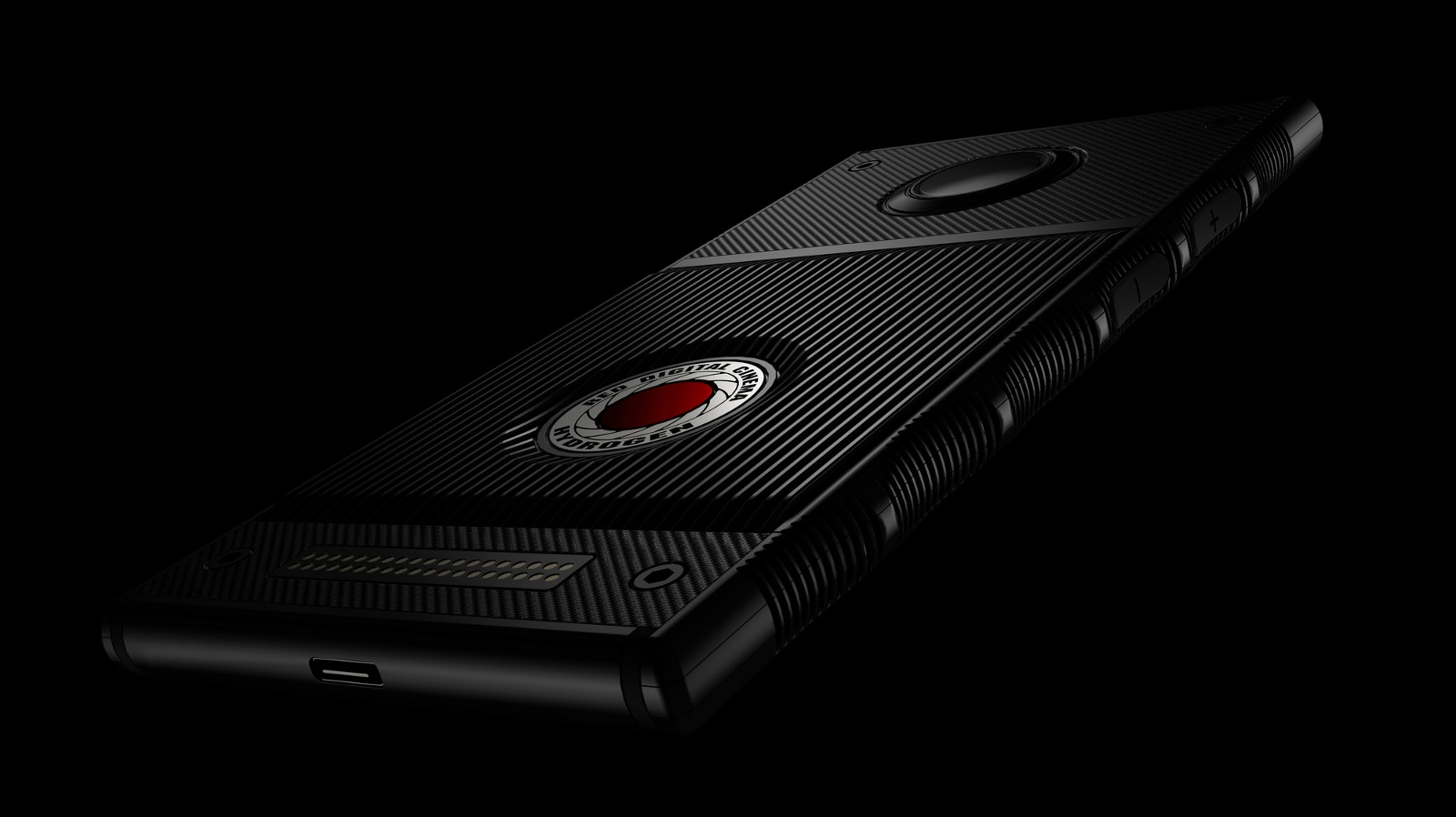
- The Red Hydrogen One has appeared on Google’s Android Enterprise page.
- Google’s page reveals that the phone will have 6GB of RAM and 128GB of storage.
- The phone also has Android 8.1 and an NFC chip, according to the listing.
The Red Hydrogen One will be shipped out to pre-order customers next week, but we still don’t know much about the new smartphone. Fortunately, Google’s Android Enterprise page has yielded a few more key details.
The updated Google page, spotted by Android Headlines and seen below, reveals that the Hydrogen One will offer 6GB of RAM and 128GB of storage. This puts the phone in high-end territory, although the older chipset means it won’t be as powerful on paper as other 2018 flagships.
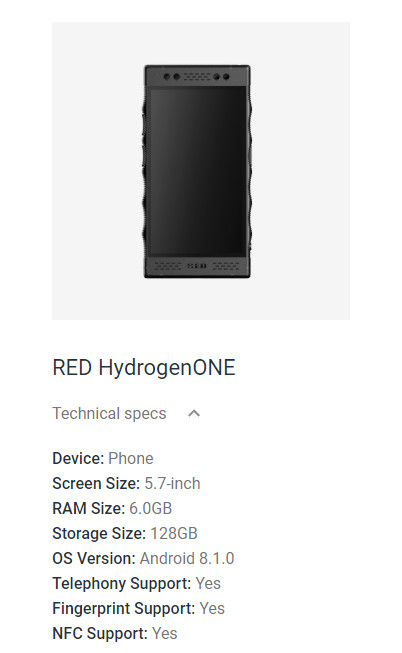
Red’s phone also supports NFC and Android 8.1, according to Google’s page. It’s a little disappointing to see Android 8.1 when Android Pie has been available since August, but I imagine that switching to Pie would’ve put more pressure on release timelines.
What else to know about the phone?
This latest leak certainly helps us fill out the Red Hydrogen One specs sheet. Other confirmed details include a Snapdragon 835 chipset, 4,500mAh battery, a side-mounted fingerprint scanner, and a headphone jack.

The phone’s big selling point, however, is the 5.7-inch 2,560 x 1,440 display. Those figures don’t sound unique at all, but it’s supposed to be a holographic (4V) screen. People who’ve previously gone eyes-on with the screen have said it’s more like 3D technology than a hologram physically popping out from the phone.
In addition to the October 9 shipment date for pre-order customers, the Hydrogen One is scheduled to launch via AT&T, Verizon, and Mexico’s Telcel on November 2. Unfortunately, the titanium model has experienced more delays due to production woes, but Red is offering a free aluminum model to customers who pre-ordered the titanium variant.
NEXT: 15 best emulators for Android
from Android Authority https://ift.tt/2IuUuRW
Best Fitbit trackers and smartwatches (October 2018) https://ift.tt/2y4nriR
Fitbit, currently one of the most well-known names in the fitness tracking world, has seven different trackers on sale right now. Which of them is the best Fitbit device for you? Should you pick up one of the new fashion-forward devices like the Alta HR or Charge 3, or should you consider a smartwatch device like the Versa or Ionic?
Related:
- Best fitness trackers
- Best Fitbit alternatives
- Best kid’s fitness trackers
- Best fitness trackers for women
With devices ranging anywhere from $60-$300, there’s certainly a wide range of options from which to choose. So with that said, read on to find out which one is the best Fitbit device.
Upcoming
Fitbit Charge 3

Fitbit officially announced the Charge 3 in August 2018. With a number of hardware and software improvements this time around, the Charge 3 is probably the biggest update to the Charge line since, well, ever!
The Charge 3 is much classier than the Charge 2. It comes with an upgraded touchscreen OLED display that’s 40-percent bigger than its predecessor’s. It also has a 5ATM water resistance rating and all-new on-device software. That’s exciting, because the Charge 2’s interface was quite difficult to use at times.
It comes with a working relative SpO2 sensor too, which can help indicate early signs of health issues like allergies, asthma, or sleep apnea. While there’s no GPS on board, you can pair it with a phone to use GPS connectivity when you go out for a run.
Finally, Fitbit made sure to include the new female health tracking suite and quick replies from the device, making this more like a smartwatch than any other Fitbit fitness tracker.
The Fitbit Charge 3 is slated to arrive in October 2018.
The best Fitbit tracker
Fitbit Versa

If you were underwhelmed by Fitbit’s first smartwatch offering, the Versa might be just the thing for you.
The Fitbit Versa is much better looking and more compact than the Ionic, and it doesn’t cost as much money. Now, that lower price tag will get you fewer features (no GPS, for instance), but that’s the whole point of this smartwatch — the Versa is a smartwatch for everyone.
Don’t miss: Fitbit Versa review | Fitbit Versa vs Ionic
With the recent addition of quick replies, you can now reply to just about every app notification you receive on your wrist. The Versa also recently received Fitbit’s female health tracking suite, making this a much more powerful health tracker for women.
The Versa also brings Fitbit OS 2.0, 24/7 heart rate tracking, on-screen workouts with Fitbit Coach, over 15 exercise modes, Connected GPS, and swim tracking thanks to its 5ATM rating. There’s also room to store your music, and if you spring for the Special Edition model you’ll have access to Fitbit Pay. It’s not as powerful than the Ionic due to the lack of a built-in GPS, but we think the design of the watch puts it ahead of the pack.
Fitbit Ionic

This is the best Fitbit you can buy if you need something with a GPS. It’s an incredible fitness and sleep tracker, comes with a built-in GPS, allows you to pay for things from your wrist, and it’s water resistant. If you don’t care about smartwatch features and are looking for a high-end Fitbit device, buy the Ionic.
More: Fitbit Ionic review | Best GPS running watches
Just like the Fitbit Versa, the Ionic now has support for quick replies for notifications and female health tracking features.
Software issues aside, the Ionic is one heck of a fitness watch. It’s available now on Amazon and Fitbit.com for $269.95, and comes in three different color options.
Fitbit Charge 2

If you’re buying a fitness tracker in this price range, it’s hard not to consider the Charge 2.
It’s clear Fitbit really focused on design when making the Charge 2. This device not only looks more like a piece of jewelry and less like a standard fitness tracker this time around, you also have the option to change out the bands if you’d like.
See also: Fitbit Charge 2 review | Fitbit Charge 2 vs Charge HR
The Charge 2 also has a bigger display this time, meaning you get more room for smartphone notifications. Plus, Fitbit also introduced a few new features to the Charge 2 that should help users stay healthy and relaxed overtime: Cardio Fitness Level, which will give you a cardiovascular rating based on an estimate of your VO2 Max, and Relax, a new on-device guided breathing feature that will walk you through short breathing exercises to help you lower blood pressure, reduce stress and lessen anxiety.
Overall, it’s an all-around great fitness tracker, especially considering its sub-$150 price point.
Fitbit Alta HR

2016’s Fitbit Alta has been one of our favorite fitness trackers since launch, mainly due to the sleek, stylish design that many other Fitbit devices lack. But what if you’re looking for a device similar to the Alta, but can’t go without a heart rate sensor? You’ll want to check out the Fitbit Alta HR, the company’s slimmest activity tracker with a heart rate monitor.
The new Alta HR brings the company’s own PurePulse heart rate technology to a slimmer form factor. Fitbit supposedly developed a new chip for the Alta HR that reduced the size and number of components needed, allowing for a 25% slimmer design than the Charge 2. With a built-in heart rate sensor, you’ll be able to better track your calories burned, non-step exercises like yoga and spinning, and also see real-time heart rate zones on your wrist. Having a heart rate sensor on your activity tracker really does make a world of difference.
See also: Fitbit Alta HR review | Best heart rate monitors and watches
Alongside the Alta HR, Fitbit also introduced two new sleeping features, Sleep Stages and Sleep Insights. Sleep Stages utilizes the heart rate sensor to estimate the amount of time you spend in light, deep and REM sleep, as well as the time you spend awake each night. Sleep Insights, on the other hand, uses all the data your Fitbit collects to provide personalized guidance on how to better improve your sleep. If you’re interested in learning more about Sleep Stages and Sleep Insights, more details can be found here.
If you need a slim fitness tracker and Fitbit device that doesn’t skimp on the features, the Alta HR is for you.
Best budget Fitbit tracker
Fitbit Flex 2

The Fitbit Flex 2 is a well-designed fitness tracker with a lot of neat features that serves as an introduction to Fitbit’s excellent software and ecosystem. It’s a small, convenient device that can take on any look to match your style and will easily survive a dip in the pool. While it might lack advanced features, it is nevertheless smarter than you might expect thanks to the highly capable app and brilliant activity autodetection.
This Fitbit device isn’t perfect, though. Serious gym rats will be disappointed at the lack of tracking for strength workouts, battery life could be longer and the notifications are somewhat pointless in most situations.
Read and watch: Fitbit Flex 2 review | Fitbit vs Garmin
But if you like the svelte and versatile design and you’re just looking for something that will reliably track your steps and activity, then you might not need those extra features anyway. And in that case, the Fitbit Flex 2 is probably one of the best basic trackers available.
You can purchase it on Amazon in Black, Lavender and Magenta color options for just $59.95.
Best Fitbit for kids
Fitbit Ace

Child obesity is on the rise, and Fitbit wants to do something about it. That’s why it launched the new Fitbit Ace fitness tracker for kids.
On the surface, you may think this is a repackaged Fitbit Alta HR — and you’d be correct. But the Ace features an all-new feature set designed specifically for kids ages eight and up. This device can keep track of your children’s steps taken, active minutes, and sleep stats, and you can even customize daily step and active minute goals. The Ace features move reminders to help them remember to move if they’ve been sitting too long. Kids will receive celebratory messages and collectible badges if they achieve their goals.
Read more: Best fitness trackers for kids
Fitbit also introduced a new Fitbit family account alongside the Ace. This allows parents to keep a closer eye on their children’s activity, progress, and friend requests in the Fitbit app. There’s also a new child view setting, which limits what data your child sees in the app.
The Fitbit Ace is now available from Fitbit’s official page for $99.95.
So there you have it — our guide to the best Fitbit devices! Are we missing something? Have you tried a Fitbit device in the past? If so, what are your experiences? Let us know your thoughts in the comments!
Next: The most common Fitbit problems and how to fix them
from Android Authority https://ift.tt/2y81g9q
LG V40 ThinQ leak suggests its primed for a strong selfie game https://ift.tt/2NLITUk

- A new leak appears to have detailed the LG V40 ThinQ’s camera setup.
- The speculation suggests front-facing camera will have a regular and a wide-angle lens.
- As previous reports have already indicated, the rear-camera setup could consist of a telephoto, ultra-wide angle, and regular lens.
We have heard a lot about the LG V40 ThinQ’s five cameras already. However, a recent tweet by Evan Blass appears to have revealed new details about the dual front-facing camera setup.
Blass claims the dual front-facing camera setup will be made up of a standard and a wide-angle lens. He also added that the rear camera trio will be made up of a standard, telephoto, and super-wide angle lens (like LG has already teased in a promotional video).
About those five cameras on the LG V40 ThinQ… pic.twitter.com/DzC9aJnlFT
— Evan Blass (@evleaks) October 1, 2018
Having a regular and a wide-angle lens makes a lot of sense on a selfie camera. A wide-angle lens allows you to fit more of a scene into your photo than a regular lens, even if the camera is the same distance from the subject. This can be useful for group selfies or if you want a selfie that includes a lot of the background.
While it appears that the LG V40 ThinQ won’t get a depth sensor or a telephoto lens on the front, it may still be able to take portrait selfies using the camera’s software, just like on the LG G7 ThinQ’s single selfie camera.
Blass didn’t mention megapixels or any other selfie camera details. However, a previous leak suggested that the front-facing camera setup will include one 8MP lens and one 5MP lens. The rear camera setup is said to be made up of two 12MP lenses and a 16MP lens.
Should the rumors be true, the LG V40 ThinQ wouldn’t be the first LG phone to get a regular and a wide angle front facing camera setup; the LG V10 also had one.
We won’t have to wait too long for confirmation of the camera details (and other specs), as LG will officially reveal the V40 ThinQ on October 3.
Next up: LG V40 ThinQ specs, release date, rumors, and more!
from Android Authority https://ift.tt/2xP3Svp
Nokia 7.1 Plus images, specs appear online ahead of reveal? https://ift.tt/2xOsVPw
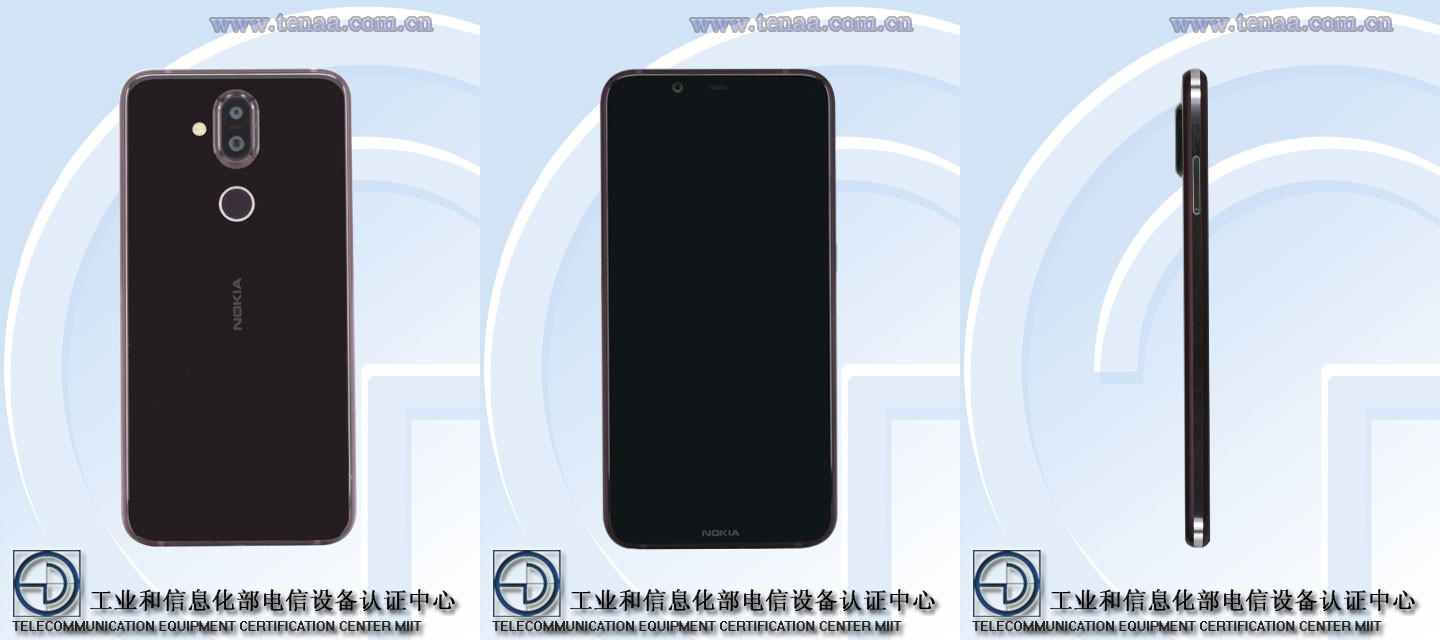
- A new Nokia-branded smartphone has appeared on China’s TENAA regulatory website.
- The new phone may be the rumored Nokia 7.1 Plus.
- The phone’s specs sheet suggests we’re looking at an upper mid-range device.
HMD Global is expected to launch a new handset on October 4, tipped to be the Nokia 7.1 or Nokia 7.1 Plus. Now, an unknown Nokia-branded phone (model number TA-1131) has appeared on China’s TENAA website, and it could be one of the anticipated devices.
The listing provides images, but it looks like the phone has a different design compared to the supposed Nokia 7.1 Plus seen in an earlier MySmartPrice leak. Most notably, we see a large dual-camera hump here, with the flash located outside of the housing. By comparison, the earlier leak showed a phone with a slight hump and the flash inside the camera housing.
Further, the TENAA image shows volume keys on the left-hand side of the device, whereas the earlier render shows power and volume keys on the right-hand side. The new image also seems to show a bigger gap between the front-facing camera and the earpiece. In other words, the images suggest that we’re either looking at two different phones (perhaps the 7.1 and the 7.1 Plus), or the earlier leak isn’t accurate.
What about features?
Moving to the spec sheet, there’s an unnamed 2.2Ghz processor, 4GB to 6GB of RAM, and 64GB to 128GB of expandable storage. Toss in a 6.18-inch TFT display (2,246 x 1,080) and a 3,400mAh battery, and you’ve got a solid upper mid-range package.

Nokia 6.1 Plus review: The one that just works
The new phone certainly seems like a Nokia 7 Plus successor when it comes to the camera experience, featuring a 12MP+13MP rear camera pairing (with what appears to be Zeiss branding), and a 20MP selfie snapper.
A rear fingerprint scanner, headphone jack, and Android 8.1 round out the list of features.
We’ll only have to wait a few more days for the official reveal to take place. But if this is indeed a follow-up to the Nokia 7 Plus, it doesn’t seem like an upgrade across the board. More specifically, the older model has a bigger battery (3,800mAh) compared to this device. Hopefully, we see bigger upgrades in the power and photography fields…
NEXT: Smartphones — not computers — are pushing the silicon industry forward
from Android Authority https://ift.tt/2y67NmO
Android version distribution: Still no sign of Pie in September figures https://ift.tt/2MLmMJi

Google has released its September Android Distribution numbers and Android 9 Pie still doesn’t make the cut. This means less than 0.1 percent of Android devices use the latest operating system, despite Pie rolling out to Pixel and Essential handsets back at the beginning of August, and OnePlus, Nokia, and Huawei devices in more recent times.
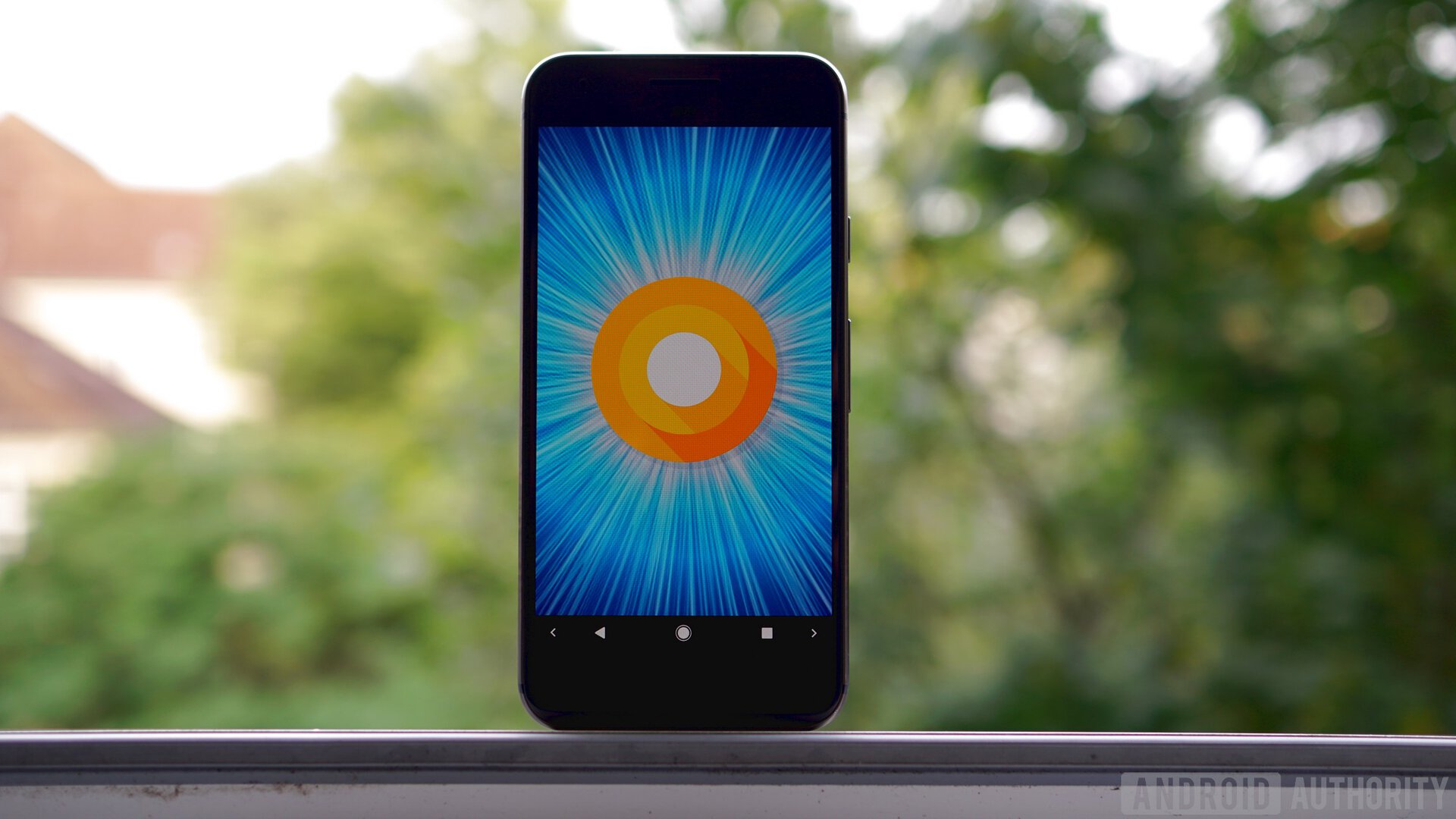
While it’s disappointing that 99.9 percent of Android phones still don’t run the latest version, the number of devices using Oreo continued to increase. Currently, 19.2 percent of Android devices use Android 8.0 or 8.1 — a 4.6 percent increase on last month. At the same time, Nougat, Marshmallow, and Lollipop all fell around one percent.

Jelly Bean and KitKat saw a decline also, though Gingerbread and Ice Cream Sandwich hold steady on 0.3 percent each. We’re now at around 88 percent of Android devices running Android Lollipop or later, and we hope to see Pie rear its head in the next report.
Why do Android updates take so long?
From KitKat, to Lollipop, to Marshmallow, and to Nougat, each new version of Android seems to hit fewer devices and do so in a slower fashion (see the chart below). Why does this happen?
Firstly, folks are holding onto their phones for longer periods of time, which means the number of active devices running older versions of Android stays high (the continual increase of flagship phone prices may also contribute to this).
What’s more, many Android devices are launching without the latest version of Android, attributable to the rise of lower-cost Chinese devices and increased market growth in developing countries.
The other key factor here is that each new Android version arrives with more Android devices in circulation, meaning its immediate impact is decreasing. When all of the major OEMs got their flagships up and running with Ice Cream Sandwich, it represented a significant share of Android phones because there were far fewer of them. There are more than two billion monthly active Android devices in use now, so there is simply more ground for the latest Android version to cover.

The increased rate of release for major Android versions may be one of the biggest reasons for this tend too, as shorter OS version shelf lives equal lower market penetration. Jelly Bean was available for about 16 months before KitKat arrived. KitKat stuck around for slightly over a year followed by Lollipop which just scraped past 11 months before Marshmallow hit the scene. Then Marshmallow was only out for ten and a half months before Nougat showed up in mid-August.
Oreo was the only recent software version to buck the trend, releasing almost a year to the day after Nougat, before Pie arrived 12 months after that. According to an AMA with the Android development team in July, Android versions will stick to an annual schedule going forward, which could mean less fragmentation going forward.
Being on the latest version of Android isn’t as important as it once was, though. With Play Services, for instance, Google can push out important updates to just about every Android device without the need to bake it into Android (thus requiring an entire software update). Plus, a good amount of OEMs have been focusing on rolling out the latest Android security patches to their devices, which means Android phones aren’t as vulnerable to attacks as they once were.
from Android Authority https://ift.tt/2hJnnh4