Thursday, 1 November 2018

13 best Android emulators for PC and Mac of 2018 https://ift.tt/2z0XJiX

There are a lot of valid reasons why someone would want to run Android emulators on their PC. App developers may be trying to test their application before shipping it out. Gamers may want to use a mouse and keyboard on their games. Maybe you just want it there to have it. In any case, Android emulation on PC is possible and we’re going to take a look at the best Android emulators for PC. Please note, the process is rarely easy and some of these require some technical knowledge. There are only a few emulators where it’s as easy as downloading, opening, and using them. The market slowed down a lot in recent years with many old favorites (Andy, AmiduOS, and Leapdroid) permanently leaving the space. You can find out about their fates at the bottom of the article.


Android Studio's emulator

Price: Free
DOWNLOAD ON GOOGLE PLAY
Android Studio is the Google-approved development IDE for Android. It comes with a bunch of tools to help developers make apps and games specifically for Android. As it turns out, there is also a built-in emulator that you can use to test out your app or game. Clearly, this is not good for consumer level stuff. However, those developing apps do already have a powerful (and free) tool at their disposal to help test their apps. It's a pain in the neck to set up. It's not too bad once you do, though.
DOWNLOAD ON GOOGLE PLAY

ARChon

Price: Free
DOWNLOAD FROM GITHUB
ARChon isn't a traditional emulator. You install it into Google Chrome. It then gives Chrome the ability to run Android apps. It's not an easy emulator to get running. You'll have to install the thing to Chrome. From there, you have to obtain APKs and load them in. As an added rub, you may need to use a tool to change the APK in order to make it compatible. We have the basic instructions linked up at the button above. This one is compatible with Mac, PC, and Linux. It's also one of the most difficult to set up, but it's also one of the most unique Android emulators.
DOWNLOAD FROM GITHUB
ARChon

Bliss

Price: Free
DOWNLOAD FROM XDA-DEVELOPERS
Bliss is something a little bit different. It works as an Android emulator for PC via virtual machine. However, it can also just flat run on your computer through a USB stick. This is definitely a power user option and not recommended for the less tech savvy. As a VM install, the process is fairly simple, if tedious. The USB installation method is even more complicated, but it lets your computer actually run Android natively if your system is compatible. Of course, it only really runs well if your system is compatible and that is a bit of a crapshoot right now. The system runs Android Oreo which is a step up even from Bluestacks' Nougat. This is a bit of a diamond in the rough, but again, we only recommend this one to the tech savvy.
DOWNLOAD FROM XDA-DEVELOPERS
Bliss


Bluestacks 4

Price: Free / $2 per month
Download from Bluestacks!
Bluestacks is the most mainstream of all Android emulators. There are several reasons for that. For starters, it's compatible with Windows and Mac. It was one of the first ones to work reasonably well. The emulator targets mobile gamers. Earlier versions of Bluestacks were kind of bloated. The newest Bluestacks, dubbed Bluestacks 4, came out in 2018. It's not the cleanest experience out there. However, it has the ability to launch multiple instances so you can play multiple games at once (or the same game multiple times). It also includes keymapping and settings for many games installed. That should help make things much easier. It's one of the heaviest emulators on the list. However, it also has the most features for better or for worse. Recent updates put Bluestacks at Android 7.1.2 (Nougat), one of the most recent of any emulator. The update to Bluestacks 4 also improved speed, even on older computers. It's heavier than most but it works quite well in most situations.
Download from Bluestacks!

Droid4X

Price: Free
DOWNLOAD ON DROID4X
Droid4X has had its ups and downs. However, it's one of the classic Android emulators for PC. It features a simple design that should be easy for most people to use. It markets itself towards gamers and boasts support for simpler, casual games. However, like most Android emulators, you can do productivity stuff if you want to. This one is not in active development anymore. Its last update was March 28th, 2016. Thus, we recommend you tread with caution as this could be a buggy and unstable product. Droid4x is also Mac compatible. Finding the installer for that is a little difficult, though.
DOWNLOAD ON DROID4X
Droid4X

Genymotion

Price: Free with paid options
Download from Genymotion
This Android emulator is mostly for developers. It lets you test your apps on a variety of devices without owning them. You can configure the emulator for a variety of devices with various versions of Android to help suit your needs. For instance, you can run a Nexus One with Android 4.2 or a Nexus 6 with Android 6.0. You can easily switch between virtual devices at will. It’s not great for consumer uses, but Genymotion does offer their services for free for personal use. It's usable both in the cloud and on your computer
Download from Genymotion

KoPlayer

Price: Free
Download from KoPlayer!
KoPlayer is a newer Android emulator for PC. It has also managed to fly under most radars until recently. Its main focus is for gaming. You'll be able to use keymapping to emulate a controller with your keyboard. Players will also be able to record game play and upload it wherever they want. The install process is easy enough and it seems to work alright. Like most emulators, it does have issues that you'll run into randomly. It bills itself as a middle-of-the-road emulator. You'll be able to use it for a variety of things. The only bad side is that it is still buggy. Nevertheless, it's a good, free option.
Download from KoPlayer!

MEmu

Price: Free
Download from MEmu!
MEmu is another of the up and coming Android emulators that seems to do quite well. One of its biggest features is support for both AMD and Intel chipsets. That's rarer than you'd think. Additionally, it supports Android Jelly Bean, Kit Kat, and Lollipop. You can even run multiple instances at once. That makes it one of the few emulators that goes as high as Lollipop. Like many, you can use this for pretty much whatever you want. It'll support most games and most apps. However, we recommend it mostly for productivity. It's free to download and use if you want to.
Download from MEmu!
MEmu


Nox

Price: Free
Download from Nox!
Nox is another Android emulator for PC for gamers. That includes utilities and additions that are specifically catered to helping gamers. You'll be able to do things like game with an actual controller. This includes things like the capacity to assign “swipe right” to, say, an arrow key and simulate actual gesture movements directly on your keyboard or joystick if you have one. It’s a lot of fun and seems to work rather well most of the time. It’s also entirely free. Don't pay attention to the lag in the video below. The emulator doesn't lag like that.
Download from Nox!

Remix OS Player

Price: Free
Download from Jide!
Remix OS Player by Jide is one of the newer Android emulators for PC. It's also one of the few that runs Android Marshmallow instead of Android Lollipop or Kit Kat. The installation process is pretty simple and using it also fairly easy. It caters mostly to gamers. There's a sidebar with customizable options for you. It's relatively new, so they're still working out some bugs. Even so, it still works better than most and it's free in perpetuity. The only main caveat is that it doesn't support AMD CPUs.
Download from Jide!

Xamarin

Price: Free / Varies
DOWNLOAD ON GOOGLE PLAY
Xamarin is an IDE. It's similar to Android Studio. The difference is that it can plug into things like Microsoft Visual Studio. Also like the Android Studio, this comes with a built-in emulator for developers. It's for developers only unless you feel like setting up an entire development environment to use it. Xamarin's emulator is not as powerful as something like Genymotion, but it'll get the job done if you intend on using this. It's free for personal use. Companies and larger teams may have to negotiate a payment plan.
DOWNLOAD ON GOOGLE PLAY

YouWave

Price: Free / $29.99
DOWNLOAD ON GOOGLE PLAY
YouWave is one of the older Android emulators for PC. It's been around for a long time. Its last update was in 2016, though. That makes it fairly current. The free version uses Ice Cream Sandwich. Forking out the $29.99 will get you the Lollipop version. It seems to work pretty well. The installation process was easy enough. It doesn't have any game specific features but it will still play games. That makes it good for light gaming and productivity. This one has had quite a bit more development than most and we recommend it to those trying this whole process out for the first time. This one also has Mac support.
DOWNLOAD ON GOOGLE PLAY

Make Your Own

Price: Free
DOWNLOAD ON GOOGLE PLAY
As it turns out, you can build your own emulator. Here's how it works. You need to download VirtualBox (linked above). You then have to download an image from Android-x86.org. From there, it's just a matter of finding one of the many guides online and following the steps. This is easily the most difficult Android emulator method. We don't recommend you try without a tutorial and a little prior knowledge. It won't work well, it'll be buggy, and unless you're a coder, it'll be difficult to fix. Still, it'll be yours.
DOWNLOAD ON GOOGLE PLAY

10 best office apps for Android

10 best cloud storage services and apps for Android of 2018!

If we missed any of the best Android emulators for PC, tell us about them in the comments! You can also click here to check out our latest Android app and game lists! Here are what happened to some old classics from the list:

Best VPN Service 2018

ExpressVPN for Android is the best Android VPN app that we’ve tested. The service offers excellent security, with 256-bit encryption, an SSL-secured network, and unlimited bandwidth. The simply interface makes it easy to pick among the company’s 145 server locations, which are spread out among 94 different countries. And with excellent connection stability, you can use all your other apps with total confidence that ExpressVPN is protecting you in the background. expressvpn review

Want to give ExpressVPN a try? The company offers a risk free 30-day money-back guarantee, so you have nothing to lose. You can get three months free! Learn More


from Android Authority https://ift.tt/2ygf8jK

Video: Here’s how the Samsung Galaxy A9’s four cameras work https://ift.tt/2zk5EVj

Samsung has posted a new video detailing the Galaxy A9 2018‘s rear camera system. The video, posted on Samsung’s official YouTube channel yesterday, outlines each of the smartphone’s four rear camera sensors and what they can achieve.

The Galaxy A9 includes a 24MP main lens, 10MP telephoto lens, 8MP ultra wide-angle lens, and a 5MP lens for depth. This is the first time Samsung has adopted as many rear cameras — and it’s among the first for Android phones in general.

The ultra-wide angle sensor offers a 120-degree field of view so you can fit more into the same shot than you could with a traditional sensor. It’s quite common to find wide-angle lenses on Android now and we often see it on front cameras for wider selfies.

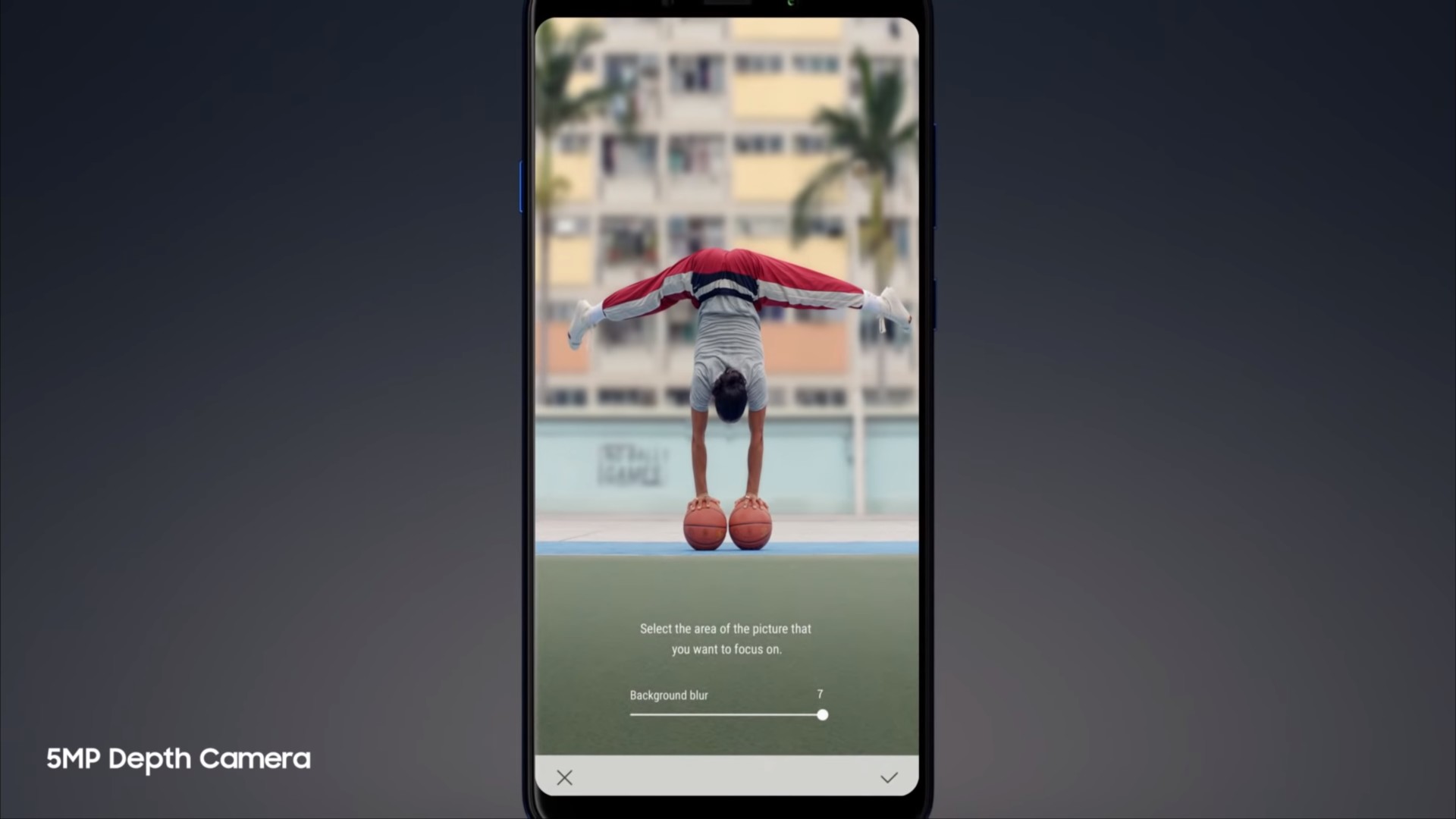
The 5MP depth sensor, meanwhile, allows Galaxy A9 users to manipulate how much of the background is blurred out when taken shots with a subject in the foreground (called Live Focus).

The telephoto lens is what allows the A9 to deliver more detailed images when zooming. It supports 2x optical zoom, which means you can cut into half of the width and height of the original picture with minimal loss in quality.

Finally, the main 24MP sensor should provide quality photos in a standard setup (without zooming, without a wider scene, without background defocusing) and will automatically adjust settings depending on the lighting and the type of scene (known as AI scene recognition).

The video finishes off with a roundup of the other main Samsung Galaxy A9 specs, which you can also check out at the neighboring link.

Editor's Pick

As far as non-Galaxy Note or Galaxy S series models go, the Galaxy A9 is one of the most interesting Samsung has ever produced. This isn’t just a poorer version of its flagship smartphones, the A9 offers a credible alternative, with a killer USP that you can’t find on many phones.

However, just because the Samsung Galaxy A9 isn’t a Galaxy S or Galaxy Note device, doesn’t mean it’s inexpensive though. It’s starting at 599 euros in Europe (~$680), which is a fair whack for a smartphone with a ‘mid-range’ chipset (the Snapdragon 660).

The Galaxy A9 2018 is tipped for release on November 15 in the U.K. and Europe, but the U.S. is unlikely to be a launch market. Give us your thoughts on the A9 in the comments.


from Android Authority https://ift.tt/2Qd5ciP

Palm Phone hands-on: The supplemental smartphone https://ift.tt/2QbhqbI

In 2018, we’re not focused on what our devices can do, but rather what we can do without our devices. Everyone from Google to Apple is pushing some kind of anti-addiction initiative, prompting users to take a break from their screens every once in a while so they can experience things in the real world more often.

The past few years also saw the resurgence of legacy brands. Blackberry, Nokia, and others came back in a big way, banking on nostalgia to help lift them into the spotlight shared by the likes of Samsung and Google.

Now, Palm is back too, and instead of trying to compete in an over-saturated landscape of big, immersive handsets, it’s betting big on another category – one at the intersection of wearables and mobile phones.

The Palm Phone is not a technically impressive device. With a Qualcomm Snapdragon 435 chipset, 32GB of storage, and 3GB of RAM, this isn’t the flagship device you’ll agonize over for days before buying. Instead, Palm is hoping for its new phone to supplement your daily driver. It’ll be an extension of your phone when you want to be more connected with the real world — I mean that literally.

This is not a technically impressive device. Think of it more like an extension of your main smartphone.

The Palm Phone works on Verizon’s network with an eSIM that mirrors the SIM on your main device. It shares the same phone number, meaning it’ll receive the same calls and texts as your primary phone. The point of the Palm Phone is to be the little cellular gadget you might need when you don’t really want to be consumed by the digital world but still might want a phone for emergencies (or emergency Snapchats).

Palm doesn’t want you to feel like you’re missing a ton when using its device, so it’s included a 12MP rear camera and an 8MP front camera that seemed to take nice photos during the time I used it. The phone’s even IP68 water resistant, so you take it in the water with you. The company wants this thing to be your daily companion so you can leave your main phone charging at your desk.

It should be noted that this isn’t a dumbed-down device. The Palm Phone is running Android 8.1 Oreo with a skin that makes it seem almost like an Apple Watch – with big bubbly elements making it easy to select the action you want to take. And because it is still running Android, you still have full access to the Google Play Store, where you can download nearly any app and have it work on your mini phone. In that sense, the Palm phone is only as full-fledged and productivity-focused as you want it to be.

See also

According to Palm, this device is something you would keep your work apps off of. This is something you bring with you to snap a few photos or work out at the gym — not something for responding to Slack messages and browsing Twitter. In a sense, it’s an alternative to a wearable device, evident in the fact that the company is launching more than 14 accessories alongside it. They’ve made armbands for the gym, cases in the shape of a small clutch purse, and even a necklace. Palm’s biggest focus is on the development of accessories for the device because it wants the phone to fit the lifestyle you already live — whatever it is.

One of the coolest features of the new Palm Phone is called Life Mode. This toggle in the quick settings menu disables all the radios in the phone, but only when the screen is off. When you unlock the device the radios spring back to life, flooding your device with all the notifications you missed while Life Mode was enabled. Palm says this lets you take control of your life back from notifications, and I quite like this idea. It also makes that 800mAh battery last quite a long time. Palm is touting “all day battery life”, but we’re assuming it will last even longer if you keep it in Life Mode most of the time, especially considering the power-sucking display is only 3.3 inches.

The Palm Phone will be available for $349 full retail or $299 through a 24-month payment plan with Verizon Wireless, and you’ll have to cough up $10 a month for Verizon’s NumberShare program, which allows the device to share your phone number. Unfortunately, since this phone is exclusive to Verizon in the U.S. you won’t be able to take it anywhere else, and you can’t use it as your primary phone. You’ll also need to use Verizon’s Message+ texting app if you want to sync your text messages.

The Palm Phone will be available from Verizon Wireless starting Nov. 2, but you’ll also be able to snag it from Vodaphone if you live in the U.K.

What do you think about Palm’s new device? Is a supplemental smartphone a good idea? Let us know your thoughts below!


from Android Authority https://ift.tt/2Rqug6n

Lenovo Z5 Pro is finally official: A slider smartphone on a budget https://ift.tt/2qlg2rJ

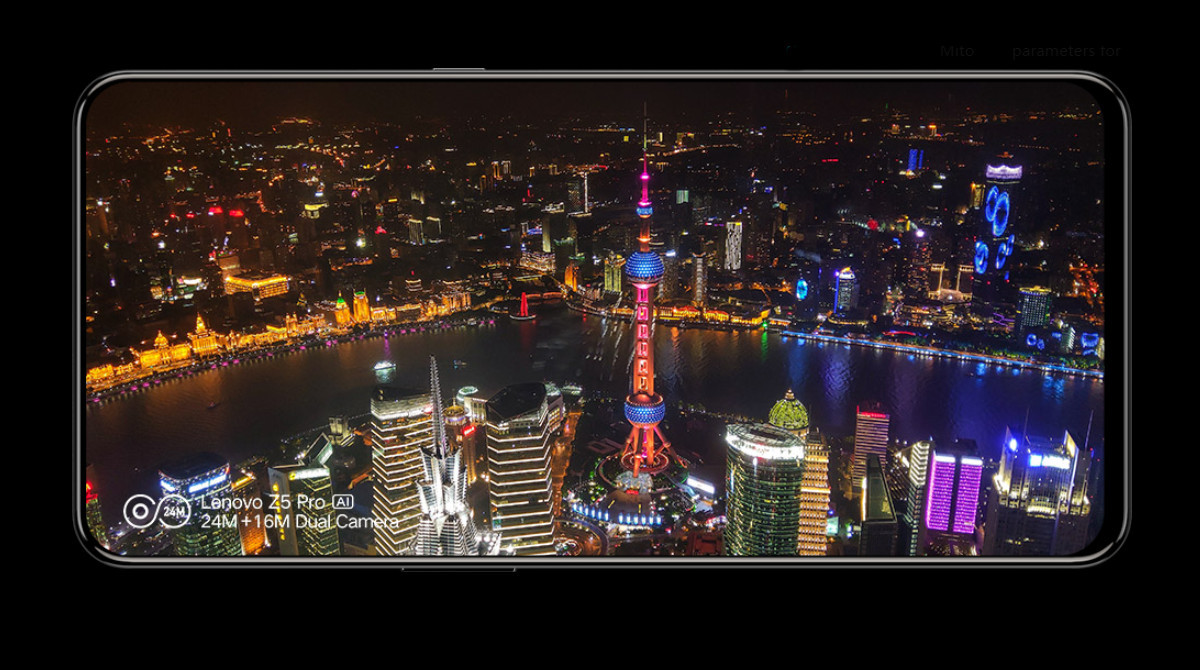
A photo taken on the Lenovo Z5 Pro. Lenovo

  • Lenovo has launched the Z5 Pro smartphone in China.
  • It joins the Honor Magic 2 and Mi Mix 3 in offering a slider-based design in recent weeks.
  • The phone is cheaper than Xiaomi and Honor’s slider phones.

We’ve seen the Xiaomi Mi Mix 3 and Honor Magic 2 offer slider designs in recent weeks, but the Lenovo Z5 Pro has been waiting in the wings too. The Chinese brand finally launched the slider device today, so how does it fare against the competition?

The Lenovo Z5 Pro is equipped with a Snapdragon 710 chipset rather than a top-end Snapdragon 845 processor seen in the Mi Mix 3. The 710 is still a very powerful SoC, but it’s not quite as nippy as the 845. Still, when you toss in 6GB of RAM and 64GB or 128GB of (fixed) storage, you shouldn’t have any performance issues.

But the drawcard here is the sliding design, enabling a notchless 6.39-inch display (2,340 x 1,080) with a 95.06 percent screen/body ratio, according to Lenovo. By comparison, Xiaomi’s Mi Mix 3 claims a 93.4 percent screen/body ratio, while the Honor Magic 2 touts a 91.5 percent ratio. The screen is also hiding an in-display fingerprint sensor, as is the case with Xiaomi and Honor‘s efforts.

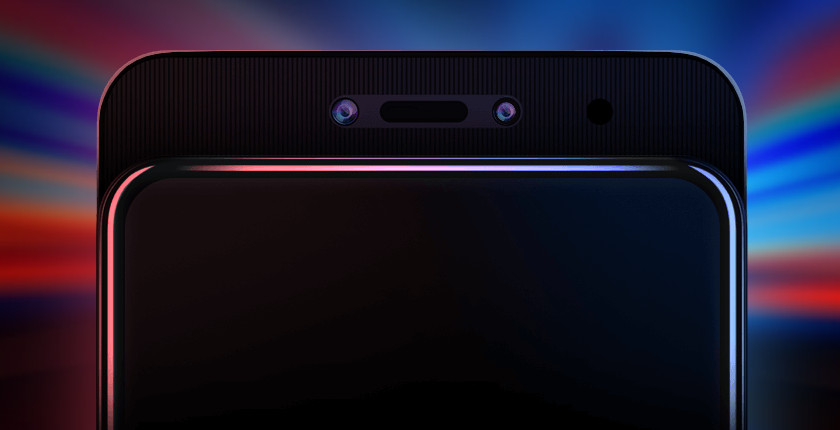
The Lenovo Z5 Pro slider. Lenovo

Pop the slider mechanism and you’ll find the earpiece, proximity sensor, and 16MP+8MP infrared camera setup. The 8MP camera enables IR face recognition, but it’s unclear if it’s also used for portraits and other depth-related effects.

Switch to the back and you’ll find a 16MP+24MP pairing (f/1.8), offering an AI Super Night Scene mode and AI Super Video Shooting. The former is essentially Lenovo’s take on today’s night photography modes, while the latter seems to be a night mode for video recording. The company has also confirmed that the 16MP shooter uses pixel-binning (four into one), ostensibly for brighter results.

Lenovo’s phone also comes with a few more tricks, such as dynamic adjustments to reduce background noise on calls, a game mode for faster performance and reduced network latency, and “deep power saving” at night.

Editor's Pick

Other noteworthy features include a 3,350mAh battery, the ZUI 10.0 skin based on Android Oreo (no word on updates to Android Pie), Bluetooth 5.0, and NFC. Unfortunately, the device lacks a headphone jack, much like the Xiaomi and Honor sliders.

The Lenovo Z5 Pro has a starting price of 1,998 yuan (~$288), while the 6GB/128GB variant will set you back 2,298 yuan (~$331). That’s not a bad price to pay for a slider smartphone, especially when the Mi Mix 3 starts at 3,299 yuan (~$475) for the 6GB/128GB model, while the Honor Magic 2 has a starting price of 3,799 yuan (~$545) for the 6GB/128GB variant.

Would you buy the Lenovo Z5 Pro over the other slider phones on the market? Give us your answer in the comments!

NEXT: The 5 biggest things to happen to smartphones since the Nexus 5


from Android Authority https://ift.tt/2znnBCj

Get ready for the upcoming Android Dev Summit with the official app https://ift.tt/2yI45RO

  • Google has announced the official app for the upcoming Android Dev Summit.
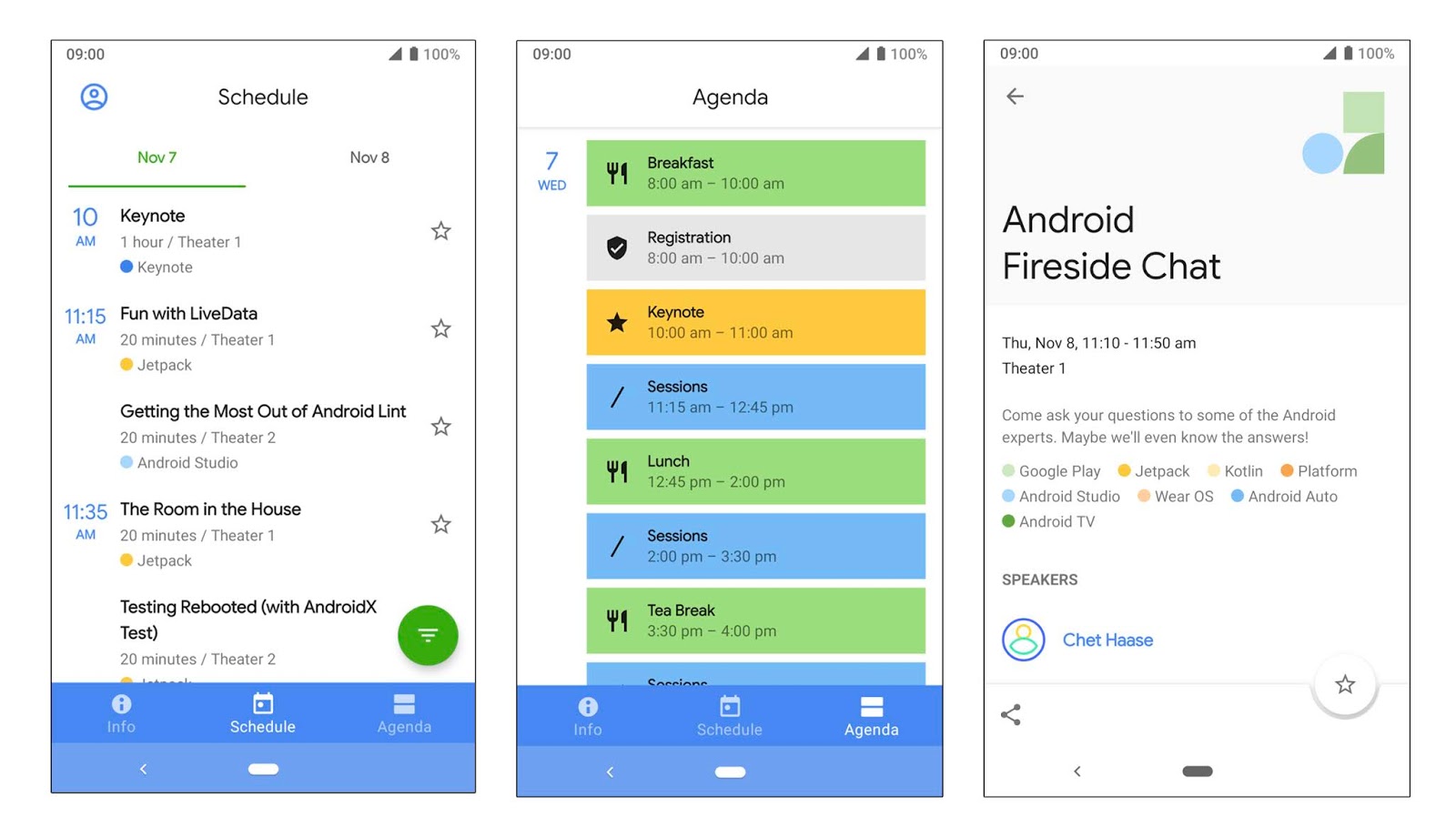
  • The app presents a schedule of all of the conference’s events and lets you livestream the conference.
  • The app also works as an Instant App, which lets you use the app without fully downloading it onto your device.

With Google’s Android Developer Summit right around the corner, the company has announced the official app for the upcoming developer get-together.

The app lets you look through the conference schedule and all of the keynotes, sessions, and lightning talks that will take place over the two days. You can also save those events to your own calendar, they’re color-coded based on type (like breaks or sessions).

You can also stream the event from the app, though you can also stream it from the website if the app does not fit your needs.

As a nice bonus, the Android Dev Summit app also doubles as an Instant App. This lets you try out the app without needing to fully download it on your device. That is why you will see the “Open App” option when you get to the Android Dev Summit app on the Play Store.

Editor's Pick

As for the event itself, the Android Dev Summit is expected to bring together Android developers from various walks of life for two days of technical sessions with Google’s engineering team. There is even a keynote speech, which vice president of Android engineering Dave Burke and group product manager for Google Search and Ads Stephanie Cuthbertson hosted during 2017’s Android Dev Summit.

The discussions during this year’s Android Dev Summit will likely focus on the nitty-gritty of Android and its SDK tools. That compares drastically to Google I/O, which typically delivers more consumer-friendly news and developments.

You can download the Android Dev Summit 2018 app at the link below. You can also follow the developments on Twitter. The Android Dev Summit will be held in the Computer History Museum in California and go from November 7 through November 8.


from Android Authority https://ift.tt/2qmdEBd

Samsung Galaxy S9 Plus could soon get Note 9’s dockless DeX feature https://ift.tt/2SBoEHG

Samsung DeX Pad

  • The Samsung Galaxy Experience 10 beta on the Samsung Galaxy S9 Plus supports DeX mode without a dock.
  • A video shows the desktop experience working via a USB-C to HDMI adapter.
  • While the video only shows the S9 Plus, the feature could also come to other Samsung phones.

The upcoming Android Pie and Samsung Experience 10 update for the Galaxy S9 Plus may let users run DeX — Samsung’s phone powered desktop experience — without a dock. A video picked up by XDA Developers shows a Galaxy S9 Plus with the beta version of the update powering Samsung DeX using a USB-C to HDMI cable.

While the video only shows DeX without a dock working on the Samsung Galaxy S9 Plus, the Galaxy S9, Galaxy S8, Galaxy S8 Plus, and Galaxy Note 8, will also get Samsung Experience 10. This suggests these phones could also be in line to get dockless DeX compatibility.

Currently, the only devices that support DeX without a dock are the Galaxy Note 9 and the Galaxy Tab 4.

Allowing Samsung flagship phone owners to use DeX without a dock would seriously reduce the barrier to entry for the feature. Currently, the DeX Pad is $84.99 on the Samsung website while the DeX Dock is $149.99. This is a lot of money to pay for a feature if you aren’t 100 percent sure how you will use it. In comparison, a USB Type-C to HDMI adapter can cost under $20.

Editor's Pick

For power users, there are upsides to using DeX with a dock. It has USB and Ethernet ports so you can get a fuller desktop experience. Using a dock also allows you to charge your phone while in DeX mode and open up to 20 windows at a time— you can only open five without a dock on the Galaxy Note 9.

DeX is a reasonably new Samsung venture (it was introduced with the Galaxy S8 last year) that allows smartphones to offer a desktop computer-like experience, complete with mouse and keyboard support. Developers can optimize their apps for use with it, but they may not be inclined to invest resources without a large user base already there. If Samsung lowers the entry fee, Dex could become a viable option for more people, which may attract more devs, resulting in better apps and overall experience. It looks like the best approach for Samsung if it wants Dex to be a longterm success.

Next up: Using Samsung DeX as a PC for a week – can you really leave your computer behind?


from Android Authority https://ift.tt/2QbIckz

Samsung W2019 ‘leak’ shows no headphone jack: Is this a test-run for Galaxy S10? https://ift.tt/2qkyAbL

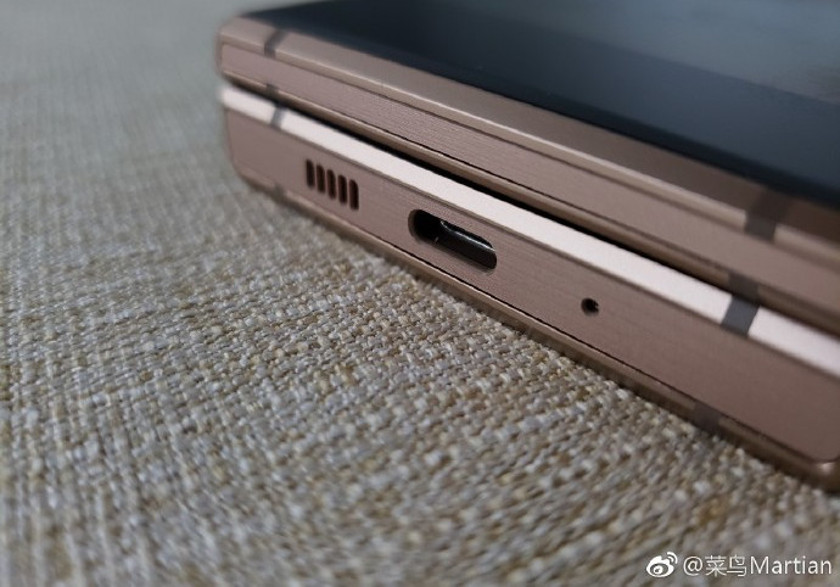
A photo supposedly showing the Samsung W2019. weibo.com/u/6271602166

  • Images of the Samsung W2019 have purportedly appeared on Weibo.
  • The pictures show a clamshell phone without a headphone jack.
  • Samsung has previously brought features to the W series before flagship phones received them.

The Samsung W series is probably the company’s quirkiest smartphone range, offering clamshell designs and ludicrous price tags. We’ve heard murmurings of a Samsung W2019, and it seems like the first images may have appeared online.

The pictures were posted by a Weibo user (h/t: GizChina) and show a clamshell smartphone with what appears to be Samsung branding at the top of the screen.

One of the biggest takeaways is that the phone doesn’t appear to have a 3.5mm headphone jack at the top or bottom. The top understandably hosts the clamshell hinge, but we only see a speaker grille and USB Type-C port at the bottom of the device (as seen in the main image).

Samsung has been one of the biggest proponents of the headphone jack in the first place, so omitting the standard would be a sea-change for the company. This could also be indicative of Samsung’s 2019 flagship plans. Last year’s W2018 offered a dual-aperture camera before the Galaxy S9 grabbed the feature, so Samsung could conceivably be testing another “feature” before bringing it to the next flagship.

The news comes a week after Bloomberg claimed Samsung has a Galaxy S10 prototype without a headphone jack. This doesn’t necessarily mean a final decision has been made, so there’s still hope for fans of the standard.

Other than the missing headphone jack, there isn’t much else to know about the clamshell device. We have a screen on the outside (much like previous W series devices), a dual-camera arrangement on the back, but no rear-mounted fingerprint scanner. This could mean there’s an in-display fingerprint sensor or a scanner on the keypad.

Editor's Pick

The images don’t show the inside of the phone or the UI, which would’ve gone some way to showing that it’s indeed the real deal. But Samsung usually reveals its new W series phone in the last few months of the year, so we won’t have to wait too long to find out. Just don’t expect to buy the W2019 outside China, because the series is usually a regional exclusive.

What do you make of these images? Would you buy a Samsung phone without a headphone jack? Give us your thoughts in the comments below.

NEXT: Looks like a lot of people in Western Europe really want the Mate 20 Pro


from Android Authority https://ift.tt/2PBUWDO