Google now allows automatic backups even if you don’t pay for Google One (Google Drive’s subscription). The backups should include device data, multimedia messages, and some other stuff as well. Additionally, the iOS version of the app backs up media, contacts, and calendars. Luckily, stuff like contacts and calendars are already backed up on Google services anyway. This is good news since Google was also accused of collecting rival apps data to improve its own products.
Qualcomm announced GPU updates via the Google Play Store earlier this year. Now, the number of phones to support the feature are two. The first was the Mi 10 series from Xiaomi. Oppo added the functionality to its Oppo Find X2 earlier this week. We hope more phones get this sooner rather than later because it’s a great way to keep phones updated.
DJI’s official app had a bit of a kerfuffle this week. Two security firms found features that seem to go against Google Play Store policies and have the potential to spy on you. DJI fired back, saying the features are perfectly legitimate. The arguments go both ways and we recommend hitting both links to get the full scoop.
TikTok is taking the offensive against a US ban. Mark Zuckerberg and other CEOs testified to Congress this week about stifling competition. TikTok took the opportunity to say a US government ban would be just that, stifling competition in favor of Facebook and Instagram. The argument against TikTok is that it’s a Chinese company and the Chinese government could make the company spy on US citizens for China. Hit the link to read more.
Speaking of Chinese app bans, India is considering banning PUBG Mobile (again), but this time because it’s by a Chinese developer along with apps like AliExpress, Resso, and some others. This issue dates back months as India and China share some political drama. The list now totals 275 Chinese apps that may be on the chopping block in India.
Narcos: Idle Cartel
Price: Free to play
Narcos: Idle Cartle is an idle clicker game with a crime premise. You play the role as a smuggler who builds an empire out of nothing. It also ties into the Narcos TV show and there are cameos from characters as well. Some other game elements include a gacha element for characters from the show and some decently deep idle tap mechanics. It’s far from perfect, but it’s not a bad time waster for fans of the show.
Amoni Launcher makes your phone look like iOS 14. You get similar widget placement and styling, similar icon styling, and similar icon folder styling. Additionally, the launcher comes with some extra goodies like an iOS style battery widget, a light and dark mode, wallpaper blur, and some other neat iOS 14 style effects. There are some bugs and issues here and there, like a lack of gesture support on some devices, but it’s otherwise surprisingly solid for a new app. It runs for $0.99 up front but features no additional in-app purchases or ads.
Aggretsuko: The Short Timer Strikes Back. This one is a hybrid of a builder sim and a match-three puzzle game. Players play through the game and upgrade their little office building. The game also features a bunch of humor from the show, including its high contrast between cutesy and heavy metal elements. There are multiple characters to play with, each with their own abilities. You can even watch some of the original one minute animations from 2015 as you progress as well. It’s free to play like most games in the genre, but most people don’t seem to mind it.
Bibino Baby Monitor is a new baby monitor app. At its core, it works like many other mobile baby monitors. You use one device in your baby’s room and then your usual daily driver. The app connects the two so you can use the other phone’s microphone and camera to view and hear your baby. This one features audio and video recording, notifications when the app hears or sees something, and you can even play lullabies over the second phone to put the baby to sleep. It works over WiFi or mobile data. Some have reported the app not being loud enough to wake one up from sleep and a lack of a low light camera mode, but otherwise it seems to work pretty well.
Guardian Tales is a hack-and-slash adventure game with puzzle and RPG elements. Players gather a group of adventurers and explore dungeons, duke it out with bosses, and build up their floating castles. The game features fast game play, online PvP, and guilds where players can test out their strength against a scarecrow target. This one is fairly well polished for how new it is and it currently garners a 4.9 rating on Google Play with 31,000 ratings. We’re not sure they’re all legitimate, but the game is still fun either way.
Every year, Samsung launches a new entry in its ultra-premium Note line. In 2019, though, Samsung upended its own formula and released two devices in the Note line: the Samsung Galaxy Note 10 along with the Samsung Galaxy Note 10 Plus. The Plus variant is physically larger with more features, better specs, and a higher price.
We’re only a few days away from the launch of the 2020 iteration of Samsung’s premier phone line. This got us thinking about how the Note 10 Plus has held up over the past year. That’s exactly what this Samsung Galaxy Note 10 Plus long-term review is going to determine!
We’re going to talk about the highlights of the Note 10 Plus that have aged well over the past 12 months. We’re also going to dig in and discuss the issues one might face if they bought this phone in 2020. Ultimately, we’re going to answer the big question: would it still be a good choice to buy the Note 10 Plus today?
About this article: I used a Samsung Galaxy Note 10 Plus exclusively as my daily driver over a period of five days. I used the Aura Glow model with 12GB of RAM and 256GB of storage. It was running One UI version 2.1, based on Android 10.
Samsung Galaxy Note 10 Plus review recap
It’s hard to believe it was a year ago that we first reviewed the Samsung Galaxy Note 10 Plus. Why not refresh your memory of what we said then by checking out the video above or hitting up the written review.
How does the 2019 hardware compare to 2020 hardware?
When it comes to raw specs, the Samsung Galaxy Note 10 Plus could still easily go head-to-head with any 2020 flagship. Sure, the Note 10 Plus doesn’t have the mighty Snapdragon 865 processor (nor even the Snapdragon 855 Plus), but the Snapdragon 855 is still a very capable chipset. In my five days with the phone, there wasn’t one moment where I felt things were slow or laggy.
The 12GB of RAM obviously helped out quite a bit with this as did the UFS 3.0 storage. The point is that anyone who would hold back on getting a Samsung Galaxy Note 10 Plus because the processor isn’t an SD865 would just be silly.
The Note 10 Plus' Snapdragon 855 still flies.
Battery life was also terrific during my time with the device. I’m not going out nearly as much as I would have a year ago due to the COVID-19 pandemic, so I tested out how the device would do if I simply turned off Wi-Fi at home all day. Doing this wasn’t a problem as I still had about 60% battery by the time I went to bed. Of course, this doesn’t fully replicate a battery draining day walking around New York City, but the 4,300mAh battery didn’t let me down.
As a quick rundown, the Galaxy Note 10 Plus has some other notable specs that still shine today. These are namely a minimum of 256GB of internal storage, microSD card support, the option to charge at 45W speeds (with compatible adapter), wireless charging, and an IP68 rating.
The bottom line is that the Samsung Galaxy Note 10 Plus is still a specs beast even one year later.
The Note 10 Plus is still as pretty as can be
In our original review of the Samsung Galaxy Note 10 Plus, we talked about how Samsung clearly abandoned some power-user features in exchange for a stunning design. Let me tell you, the Galaxy Note 10 Plus is still a stunner, especially the Aura Glow model I was using.
It’s so pretty that I went without a case for the whole five days. I even found myself putting the phone on my desk face-down just because it looked cool to have such a gorgeous thing near my keyboard.
The Galaxy Note 10 Plus might be one of the best-looking phones I've ever used.
The iconic squared-off design aesthetic of the Note series carries over here, giving the Note 10 Plus a chunky, almost industrial feel in the hand. I’ll admit that holding the phone in one hand for long stretches of time wasn’t as comfortable as using a phone with curvy edges. It wasn’t horrible, but worth noting.
One of the things that was a bit surprising for me was realizing how small the rear camera bump is on the Galaxy Note 10 Plus. After using the Samsung Galaxy S20 Ultra for a while, I assumed the rear camera module on Note 10 Plus was also pretty thick. However, that’s not true as the Galaxy Note 10 Plus lays nearly flat with very minimal wobble. Obviously, if you put a case on it you might not notice anyway, but I was surprised at how nice it was to not have something protruding so far out of the back. From what we’ve seen so far of the Samsung Galaxy Note 20 Ultra, that’s likely to not be the case.
Regardless, if you want your phone to be a fashion statement, there aren’t many that have been released over the past year that can compete with this one in the looks department.
The cameras get the job done
The Samsung Galaxy Note 10 Plus has a better camera system than the vanilla Note 10, and has more to offer than most devices in the Galaxy S10 series. However, I feel like the camera system is never a true focus of the Note series. Samsung usually pushes the productivity aspects, which makes sense.
That being said, the camera system on the Note 10 Plus is great at nailing the basics. I pitted it — pretty unfairly — against the Galaxy S20 Ultra for this review. While the S20 Ultra delivered better shots, the Note 10 Plus held its own to the point where I would feel fine trusting it as my daily shooter in 2020. Check out a few example images below.
Galaxy Note 10 PlusGalaxy S20 Ultra
Galaxy Note 10 Plus SelfieGalaxy S20 Ultra
Galaxy Note 10 PlusGalaxy S20 Ultra
Galaxy Note 10 Plus (5x Zoom)Galaxy S20 Ultra (5x Zoom)
Photography is very subjective, and I’m definitely no pro photographer. However, I think the Galaxy Note 10 Plus has a great camera that’s reliable, fast, and semi-accurate, but doesn’t really excel at anything. That’s not a detraction, it’s just what you need: nothing more, nothing less.
It should be noted that since the launch of the Galaxy Note 10 series, Samsung has pushed a few camera updates. For example, the Single Take feature that debuted with the Galaxy S20 series is now available on the Galaxy Note 10 series. Obviously, Samsung can’t send a software update to change the hardware, but there are constant improvements happening.
As a side note, I especially appreciated being able to use the S Pen to take pictures and start/stop video recording. This came in real handy when shooting my daily Instagram Story for the Android Authority account.
While there were objectively better cameras in the 2019 smartphone world — especially when it comes to low-light shots — I doubt general users would be disappointed with the Samsung Galaxy Note 10 Plus. It still shines.
The Samsung Galaxy Note 10 Plus gets you to work
Productivity has always been the main selling point for the Note series, and the Note 10 Plus is no exception. There are lots of features here that I had no use for such as the S Pen Air Gestures, which felt gimmicky to me. But I still found plenty to love. I think Samsung banks on that as it helps you find what makes the Note work for you.
For me, the best thing about the Samsung Galaxy Note 10 Plus was its seamless integration with Windows 10. Using the Your Phone app on my desktop, I was able to work with the Note 10 Plus all day without needing to lift it off the desk. I swiped away notifications, answered texts, and even opened up a few apps here and there by using my mouse. It was really convenient, and something that only high-end Samsung devices can fully utilize at the moment.
The Note 10 Plus is (almost) powerful enough to be my main work machine when paired with the NexDock 2 laptop shell.
I also used the Dex features built-in to the Galaxy Note 10 Plus in tandem with my NexDock 2. This gave me a laptop experience with the Note 10 Plus as the “brains” of the operation. Everything went great and most of my day-to-day work tasks worked just fine. There were a few complaints with this such as the Asana Android app not working nearly as well as the desktop browser app, but that’s not a dig on the Note 10 Plus or Dex.
I’m not sure I would ever fully dump my Windows laptop and use Dex full time, but it’s starting to seem like that could be something I might realistically consider in the future. It’s not much different from using a Chromebook at this point.
Unfortunately, the Note 10 Plus is missing some stuff
The Galaxy Note 10 Plus was one of the best, most powerful phones of 2019. But this is a Samsung Galaxy Note 10 Plus long-term review for 2020, and things have changed a bit. There are some aspects of 2020 flagships that we want now and the Galaxy Note 10 Plus simply doesn’t deliver.
There are also a few things about the Note 10 Plus that I wished were different during my time with it. In addition, there were some personal preferences that would make me hesitate in committing to a Note 10 Plus full time.
Here’s where I feel the Samsung Galaxy Note 10 Plus falls short:
No 90Hz/120Hz display refresh rate: Even in 2019 the high refresh rate display was a trend, but the Galaxy Note 10 series skipped it. The display just isn’t as nice as recent flagships because of this, and it definitely makes the Note 10 Plus feel a bit behind the curve.
No headphone jack: This has been beaten into the ground by now. However, the Note 10 series is the first in the line to not have the 3.5mm port, so it bears repeating here. Honestly, a phone geared towards power users without a headphone jack still feels as wrong today as it did a year ago.
No 5G support: I’ll be honest, I have a 5G-capable phone connected to 5G service, and I still don’t care about 5G. I simply don’t have anything in my life that necessitates 5G, so it becomes an afterthought. That being said, this will probably change over the next year or two, and the Samsung Galaxy Note 10 Plus not having 5G support is a notable omission.
Misplaced hardware buttons: Samsung made the mistake of moving all the hardware buttons (the volume rocker and side key) to the left side of the Note 10 Plus. I thought I would get used to this but even on my final day with the phone, I still tried to shut it off by hitting the empty right side. The news that we can expect the Note 20 series to move the buttons back to their usual positions tells you everything you need to know about this change.
Poor fingerprint sensor: Samsung’s ultrasonic fingerprint sensor is objectively worse than the light-based ones used on every other phone with an in-display sensor. It’s not horrible on the Note 10 Plus, but not as good as the one on my OnePlus 7 Pro. This wasn’t a deal-breaker though. It still functioned well enough most of the time.
One UI still bloated: This is a personal preference, but One UI is just too over-the-top for my taste. I appreciate the fact that I can do pretty much anything with a flagship Samsung phone with its limitless options and settings tweaks. However, it just felt like too much most of the time, and I longed for the simplicity of Oxygen OS or the Pixel UI several times during the week.
Galaxy Note 10 Plus vs Galaxy Note 20 series
As of today, Samsung has yet to fully reveal the Samsung Galaxy Note 20 lineup. However, we have seen enough rumors now to know what to expect. How will the Note 20 stack up against last year’s Samsung Galaxy Note 10 Plus?
So far, it appears Samsung could be doubling down in a lot of ways when it comes to the Note 20 family. It appears that the company is once again going to put a heavy focus on design rather than productivity with the new Notes. It also seems like the specs and features will go through the roof, especially with the rumored Galaxy Note 20 Ultra. As one would expect, pricing is also expected to go up considerably.
The real question is whether or not these upgrades and price increases will be worth it. While the Note 20 series will all likely be 5G-capable phones, is that something you need? The Snapdragon 865 is objectively better than last year’s Snapdragon 855, but will you notice that in your day-to-day usage? Will the expected camera upgrades be worth the extra hundreds of dollars you’ll likely pay for a Note 20 as compared to an older Note?
We don’t know the answers as of right now, but a “gotta have it” feature on the Note 20 series hasn’t leaked yet. Samsung might have some surprises for us, but unless you’re obsessed with raw power and specs sheets, there might not be too much to talk about.
Samsung Galaxy Note 10 Plus long-term review: The verdict
However, the device’s features and design were of a high caliber, and Note devotees are used to spending big bucks on their phones. At the time, we felt comfortable recommending that people buy a Note 10 Plus as long as the overall value for cash wasn’t a chief concern.
Is the Note 10 Plus worth $1,100 in 2020? Nope, but that shouldn't stop you from considering it.
Now, it’s easy to find a Galaxy Note 10 Plus for much less money. In the coming weeks and months, it’ll likely become even easier as Samsung will probably drop the pricing of this soon-to-be outdated model. That’ll up the value for cash ratio of the Note 10 Plus and make it a no-brainer.
Of course, the only caveats to buying a Note 10 Plus in 2020 will be the things the phone simply can’t do. For example, it won’t give you a high refresh rate display, 5G support, a headphone jack, or a bleeding-edge camera system. However, if you can look past these missing features and find it at a nice discount, the Galaxy Note 10 Plus would still make a terrific daily driver.
Samsung Galaxy Note 10 PlusThe all-around choice
The Samsung Galaxy Note 10 Plus truly has it all: great specs, a huge screen, and a great triple camera setup. Plus, the included S-Pen stylus is perfect for mobile games that require precision tapping or swiping.
Apple’s annual WWDC Conference is its time to showcase the next year of its smartphone, tablet, and Mac operating systems. As with everything Apple does, it is always a pretty big deal in the tech world.
This year’s event, held back in June, was a historic one — and not just because it was held entirely online. It’s barely been a hot minute since WWDC and already Apple has changed the conversation around tech in more ways than one.
Amongst the expected and not-so-expected updates, there was one major takeaway: by transitioning full-blown MacBooks to Apple’s own silicon, we can finally see the culmination of a decade’s work to synergize an ecosystem that other companies can only dream of.
I’ve been a Mac user for over a decade and have always been impressed by how well Apple’s products integrate with the operating system, going all the way back to the venerable iPod. Seeing the company continue to put the same level of care into every product in its ecosystem only exposes how dire the situation is elsewhere. I’m talking about Google, of course.
Apple's singular vision is driving it forward in ways Google just can't compete with at the moment.
Google’s approach towards hardware has at best been lackadaisical and at worst lacked any overarching vision or direction. The result has been individually brilliant products that don’t always work together in any meaningful way. In the face of Apple’s latest power play and with severalnew Made by Google products seemingly on the horizon, that needs to change.
It’s all about the ecosystem and customer lock-in
It is no secret that Apple has been building towards a completely unified ecosystem; a broader gamut of products that are aimed to reduce friction for a consumer. It irks Android die-hards and has flamed many a fan war, but there is no doubt that Apple’s heavy-handed focus on a consumer-first experience has resulted in a walled garden of apps, services, and products that just work and, crucially, work together.
There is no first-party equivalent for the synergy between Apple's different product lines.
Features like Continuity ensure a seamless transition between Macs, iPhones, and iPads. Sidecar increases productivity by making the iPad a powerful second screen. The ability to quickly scribble a signature on your iPad and immediately insert it into a document on your Mac is the kind of stuff that simply isn’t possible across Google’s products. This year the iPad will even get the extremely powerful Spotlight search feature from macOS.
Tablets are another telling point of comparison. The iPad app store is full of high-quality apps that often have no equivalent at all on Android. From music creation to games to code editors, the reality is that the iPad is powerful and versatile enough to become a true laptop replacement for a large customer subset.
Meanwhile, Google’s efforts to support the Android tablet market are non-existent. The number of tablet-optimized apps on the Play Store is woeful and more often than not users are left with blown-up phone apps. Samsung has tried its best finagle the most it can out of Android on its Galaxy Tab series, but it is still a sub-optimal experience and not one that is consistent across the broader portfolio of Samsung devices.
Editor's Pick
Five years of Wear OS and it’s still too messy to recommend
Today is the fifth anniversary of the release of Wear OS. Born as Android Wear, Wear OS is Google's Android-based operating system specifically designed to work on wearables and smartwatches. After five years of development and refinement, …
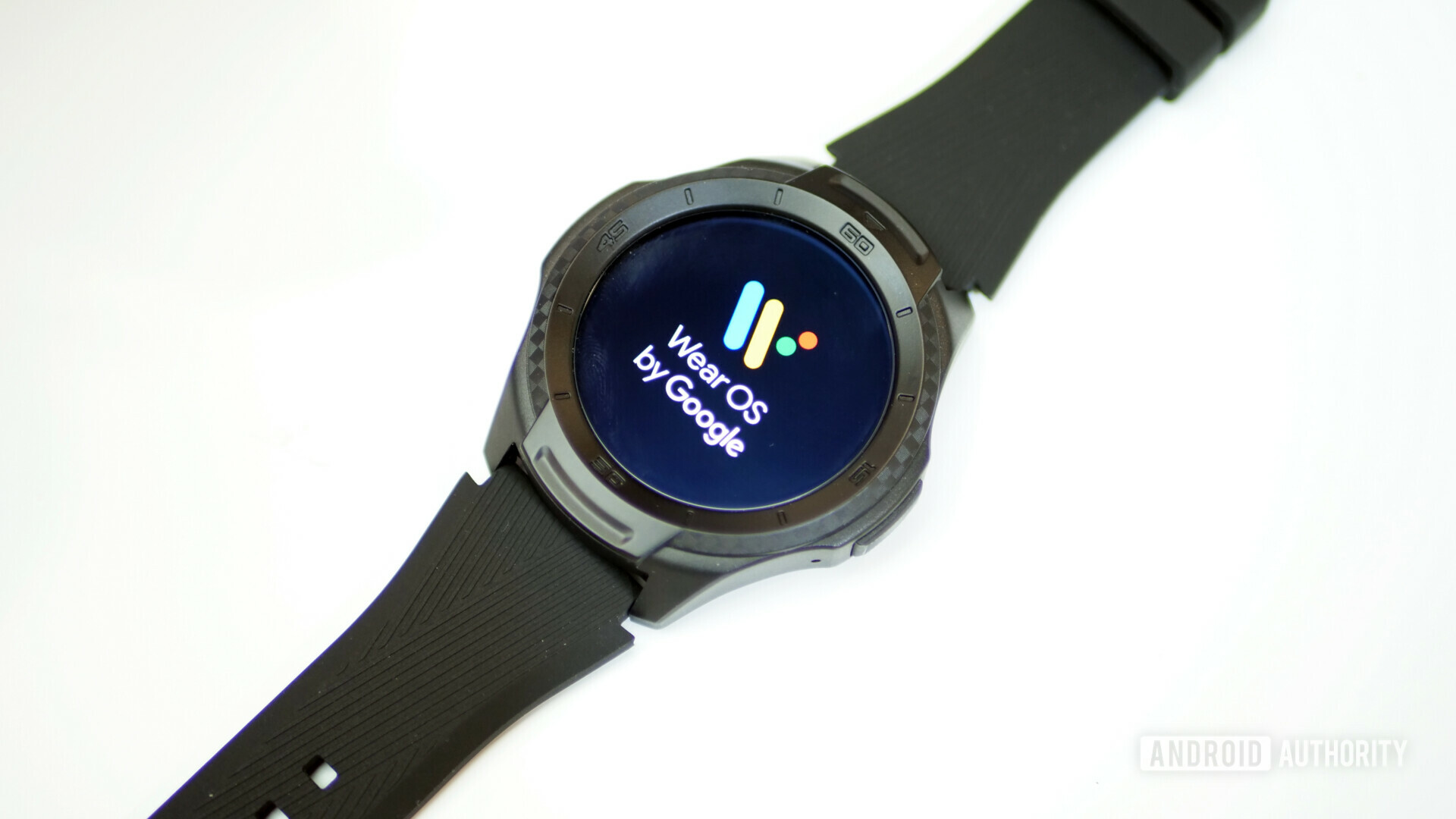
The lack of cohesion between Android tablets and the broader Google-designed ecosystem is reflected across other products too. Wear OS has languished in more ways than one. Be it the lack of general refinement, minimal enhancements, woeful battery life even on the latest hardware, or simply the lack of a flagship product from Google itself, Wear OS pales in comparison to the feature-set of Watch OS for the Apple Watch or even Samsung’s Tizen-based Galaxy Watch lineup.
The same can be said for the iPhone and even the AirPods. While Fast Pairing is making strides to improve the Bluetooth pairing experience, it is still not a reality on most modern headphones. Meanwhile, with the latest version of Apple’s software, AirPods can detect exactly where audio is being piped in from and switch between sources. This is something that can only be done with the kind of vertical integration Apple has built over the years.
After WWDC, we now have the final piece of the puzzle. With the transition away from Intel, Apple is finally in a position to bring the Mac into that same fold. The ability to run iPhone and iPad apps is a tremendous opportunity for customers and developers. Yes, Chromebooks have been able to run Android apps for a while now. However, Chrome OS devices suffer from the same app optimization issues that have plagued Android tablets. The Mac, however, will be able to bypass this by taking advantage of the enviable iPad app ecosystem.
It’s not just apps and software, though. To take an obvious example, there’s little about the Pixelbook that actually ties it to Pixel phones aside from branding. As Android Authority’s Oliver Cragg put it, you can count the ways Pixel phones integrate with Chromebooks on one hand. That’s telling of just how fragmented Google’s hardware efforts are.
Google is its own worst enemy
It could be argued that by licensing out its software and operating system Google is just an enabler for a broader ecosystem running on its platform, and that’s fair enough but you don’t invest a fortune, buy two smartphone companies, and a wearable manufacturer without having serious hardware ambitions. Between the Chrome OS running Pixelbooks, the Pixel series of phones, and Nest hardware, Google has been trying to create a semblance of an alternative to Apple’s hegemony, and with it comes the responsibility to do it right.
However, operating in silos with each product acting as a distinct vertical just hasn’t worked to Google’s advantage. This lack of a unified focus and unwillingness to listen to what the market demands was epitomized by the launch of the flawed Pixel 4 and the subsequent departure of key executives. This is all the more astonishing in a time when even the notoriously stubborn Apple is willing to budge and add widgets to iPhones and iPad.
Look, I get that Google can’t or doesn’t want to miff its partner relations. That doesn’t mean gimping your own hardware is acceptable, however.
It isn’t just Google’s own ecosystem that suffers either. The Mountain View company’s lack of focus has forced many manufacturers to create their own mini-fiefdoms — some more successfully than others — that may or may not play well with Google’s pure and secure version of platforms.
Samsung, Huawei, Xiaomi are just some of the Android-associated brands that have moved to create their own brand-specific ecosystems, further diluting Google’s own vision of a unified experience across diverse hardware.
Editor's Pick
The best smartwatches you can buy (March 2020)
Smartwatches are still a very new thing to a lot of people. You don’t absolutely need one to get through the day, and some of the best smartwatches are much too expensive for many folks …
To return to wearables example again, instead of pushing Wear OS as a platform that can truly rival the Apple Watch with a flagship Google wearable, it is instead chugging along on the back of fashion brands launching derivative hardware. Samsung, for one, has so little faith in the platform that it ended up making its own, dare I say, superior smartwatch OS based on Tizen.
Google has the ability to create incredible products, but if it wants to be taken as a credible alternative to Apple’s ecosystem it should start treating its hardware as first-class citizens rather than a conduit to onboard users to its cloud and platform services.
Arguably the brightest star in Google’s hardware portfolio has been the Google Nest ecosystem of products that has been carrying the torch forward. Yet even there, Google hasn’t really committed to expanding use cases. You just have to take a quick look at the diversity of Amazon’s first-party portfolio of Alexa-powered products to see just how far behind Google is in establishing itself as a leading-edge hardware player.
It’s encouraging that there is at least a degree of cohesion between the Pixel and Nest teams. There’s a semblance of uniformity to design languages and Google building-in direct access controls for smart home equipment on Android 11 shows that the company is willing to create synergy between its verticals.
Nearby Sharing is shaping up to be a viable alternative to Apple’s Airdrop which would finally allow you to easily share files between any platform running the Chrome browser and an Android phone. Of course, it remains to be seen if it eventually ends up in the Google Graveyard just like Android Beam before it.
Apple’s ecosystem play has developed slowly, all the while maintaining a clear, linear focus. At WWDC, Apple demonstrated what the next 10 years of computing across devices might be like, and it has me excited and concerned about what lies ahead for Google’s ecosystem ambitions.
As we rush headlong into the post-PC world, Google needs to double down on its platform and ecosystem play, be it through first-party hardware or enabling partner ecosystems, or it simply risks being left too far behind. Thankfully, there are early signs that Google may feel the same.
Rumors suggest that Google is getting ready to introduce a new dongle — with a remote, finally — that unifies the convenience of the Chromecast’s dongle design while running the superior Android TV operating system (that actually also supports Chromecast anyway). This would objectively a better consumer experience that moves the ecosystem forward.
Another positive sign is Google’s continued investment and support for Google Assistant, which now forms the backbone of so many interesting Google services — including the upcoming Google Home successor. From powering searches on the Nest Hub to loading up your favorite movie on Android TV, Google Assistant showcases the very best of Google’s cross-product software chops. But calling up videos from your smart speaker to the TV just isn’t enough. How about sending and replying to text messages from a Nest Mini? Or getting call notifications in my Chrome browser window? This is the kind of integration that sells Apple’s ecosystem and its high time Google followed through.
There are great products in the Google ecosystem, but the lack of a singular vision is holding it back.
Now is not the time to throw ideas at the wall and see what sticks. As these individual product lines mature, Google needs to think long and hard about how it brings together a collective vision for the future of seamless computing between different product categories. Four generations of phones, three generations of laptops, and umpteen experiments later, the company now needs to recognize what works and make sure it champions the Google vision of a connected future.
When Apple commits to something, it goes the whole hog. Google could stand to learn a lesson or two from the Cupertino brand.
Counterpoint Research has determined that OnePlus just edged past Samsung to claim the most market share for premium (over Rs 30,000 or $400) phones in the second quarter of 2020, snapping up 29% of the space versus just under 29% for Samsung. That’s less than a point difference, but it’s no mean feat when OnePlus is a relative newcomer and still considered a niche brand in most parts of the world.
Not surprisingly, the OnePlus 8 series played a large role in the comeback. The design and performance “attracted consumers’ attention,” Counterpoint said, while OnePlus’ ability to cultivate a loyal fan base also helped its chances.
Apple sank to third in the country due to fiercer competition, the researchers said, although it dominated the “ultra-premium” (over Rs 45,000 or $600) segment with 42% share. It also had the most phones in the premium top five. While the OnePlus 8, Vivo V19, and Samsung Galaxy A71 occupied the top three spots, the iPhone SE and iPhone 11 filled out the remaining spots. The iPhone 11 could gain share now that Apple is making the device locally and might lower the price.
Counterpoint stressed that these phones represented just a small sliver of India’s smartphone base. The devices only represented slightly over 4% of the country’s smartphone shipments — the vast majority of customers are buying budget devices. It’s no wonder that OnePlus is aiming at budget buyers with the Nord, then. While it may be happy to rule the premium phone space, it has been ignoring a massive potential audience until now.