Wednesday, 1 September 2021

You told us: Sony should think about launching a new PlayStation portable https://ift.tt/3zzlj16

ps vita
Credit: Oliver Cragg / Android Authority

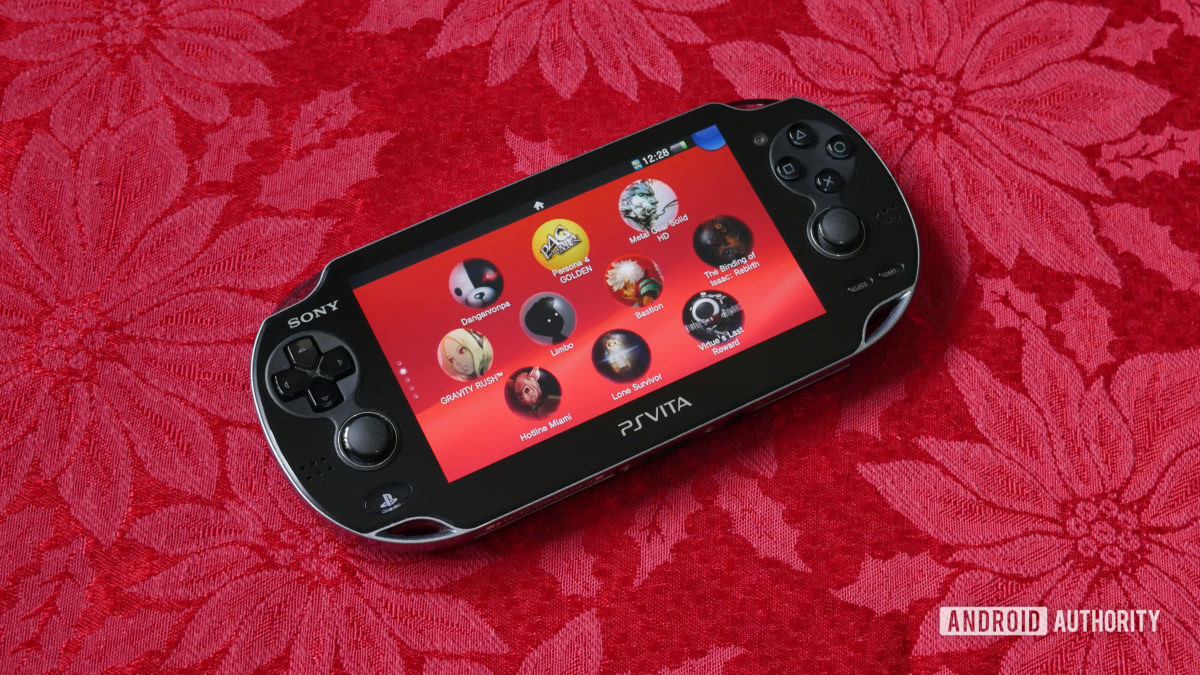
Portable gaming has taken off once more with the abundance of mobile titles, more powerful phones, and portable consoles like the Nintendo Switch. But one gaming company is sorely missed from the mobile arena. Sony has a long history of offering portable gaming systems, with the Vita and the PSP coming to mind. But what if the firm launched a new PlayStation portable console? Would you like to see this happen?

We asked our readers this exact question in a recent poll. Find the results below.

Would you like to see a new PlayStation portable console?

Results

We saw just under 1,200 votes on this poll since it was published on August 28. Readers had a pick between two options, but judging by the results, we barely needed a second choice at all.

In total, a whopping 94% of respondents would like to see a new PlayStation portable console, making this one of the more one-sided polls we’ve seen in quite some time. Just 71 (6%) respondents opposed this idea.

See also: 5 ways a new PlayStation portable could build on the PS Vita and PSP

The argument for a new PlayStation portable is exciting. Sony could use its bountiful PS4 and PS5 libraries, add user-expandable storage via microSD cards to the device, and introduce the DualSense controller’s smart haptics, too. Those against seemingly don’t want to carry yet another console around or argue that Sony’s smartphones could possibly take the place of a new PlayStation portable.

Find some more reader responses and opinions below.

Your comments

  • blindexecutioner: No back touchpad or trackpad at all. People want buttons. This wouldn’t be replacing a mouse and keyboard. I agree about the storage for sure. It also needs to be about $250 or less.
  • Jason Laird: Truth is, nobody wants to carry one around when you can just pull out your phone. That and the fact that they will always use some dumb proprietary memory card.
  • godisafairytale: Sony already makes phones. Very good, powerful phones that can handle even the most demanding Android games with ease. And which play well with Dual Shock 4 controllers. Why would they cannibalize their own products? They could open up PSNow to Android (perhaps exclusive to Xperia phones) and make Dualsense compatible, and tap into the mobile market for way less money.
  • Techngro: I still own my PS Vita. It’s modded and has all the hacks installed. But it mainly just sits doing nothing. Had so many PSPs. I used to mod them and sell them. The Vita was such a great design, but Sony abandoned it too early, or maybe they never really had any intention of supporting it long-term in the first place. I would love to see a new handheld though. One to compete with the Switch. Or at least give the ability to cast your game to a large screen. And yes, non-proprietary storage is a must. That was a huge problem with both the PSP and the Vita.
  • lsatmata: Next PSP (if Sony ever make it) must use a downscale PS5 technology. the problem with a portable console is physical media. Nintendo Switch using cartridge is actually making developer/publisher paid more than a BD because cartridge is using NOR flash and it’s way more expensive than NAND flash. on top of that, Macronix, the biggest NOR flash manufacturer still cant produce a 64 GB cartridge, even Nintendo avoiding 32 GB cartridge because it’s expensive.

That’s it for this poll. Thanks for your votes and comments. If you have any additional thoughts, be sure to drop a comment don below.


from Android Authority https://ift.tt/38tZwM6

Report: Google is taking on Apple with custom processors for Chrome OS devices https://ift.tt/2viKkSb

Google Pixelbook Go Review front view open
Credit: Eric Zeman / Android Authority
  • Google is reportedly working on its own processors for Chrome OS laptops and tablets.
  • Products with the new silicon are tipped to launch in 2023.
  • It’s also claimed that Google is “ramping up” its smartphone processor efforts.

Google confirmed earlier this year that the Pixel 6 series would be powered by the company’s first in-house chipset. The custom Tensor processor hosts some machine learning smarts and is also tipped to offer a Samsung modem.

Now, Nikkei Asia reports that Google is building its own processors for Chrome OS-powered laptops and tablets, citing three sources familiar with the plans. It’s claimed that a launch is planned for 2023.

Two sources told the outlet that Google was “particularly inspired” by Apple’s success in developing custom chipsets or smartphones and computers. Apple has been producing in-house iPhone chipsets since 2010’s iPhone 4, while it also delivered its first custom processor for Mac computers last year.

More reading: The best Chromebooks you can buy in 2021

It’s believed Google’s custom Chrome OS processors and its smartphone chipsets will be based on Arm designs, suggesting that we’ll see Arm Cortex CPUs and potentially Mali GPUs. We would also expect these new Chrome OS chipsets to contain machine learning silicon as we’ve seen with the Pixel 6’s chipset. Dedicated ML silicon allows for improvements like faster image processing, improved security, and better voice recognition.

Nikkei‘s sources add that Google is also “ramping up efforts” to build processors for its Pixel phones and other devices. This presumably means that the firm has follow-ups to the Pixel 6’s Tensor processor in the works, but we also wonder whether the firm is working on mid-range silicon for its Pixel A range.

Finally, the outlet claims that Google has asked suppliers to prepare for 50% more production capacity for the Pixel 6 series compared to 2019’s devices (pre-Covid).

It’s far too early to say whether Google will be able to take the fight to Apple on the desktop computing front with custom Chrome OS processors. But it’s worth noting that Apple develops its own CPU and GPU as well, as opposed to relying on a chip designer like Arm. This means Apple is at an advantage in theory (and often in practice) as it’s able to exert more granular control over the performance of its chipsets.


from Android Authority https://ift.tt/38vFW2o

Daily Authority: Is Windows 11 ready? 📆 https://ift.tt/2Ysg3v5

☕ Good morning! Fresh strong Geisha coffee today, fancy!

Windows 11: October 5

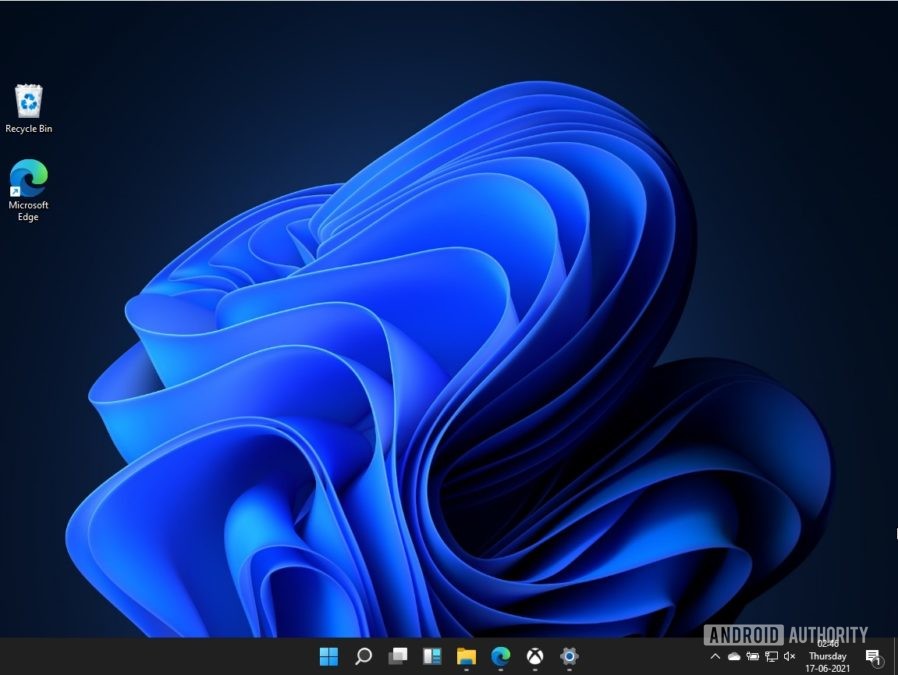
Windows 11 home screen

Microsoft has officially announced October 5, 2021 as the release date for Windows 11. The refresh has plenty going for it, but there are some weird, confusing elements too.

In short:

  • Windows 11 will be a free upgrade, available for all eligible Windows 10 PCs.
  • It’ll roll out across October and beyond, in a staged process: “We expect all eligible devices to be offered the free upgrade to Windows 11 by mid-2022.”
  • Not all features are launching on October 5.
  • Microsoft is still supporting Windows 10 until October 14, 2025, and probably longer based on previous history.

Is Windows 11 ready?

  • Windows 11 is set to improve the general experience, with a new design, Snap Layouts, an updated Start menu, Microsoft Teams integration, Desktops for improved multitasking, and a new and improved Microsoft Store app.
  • What’s a little bit unexpected is that Microsoft won’t launch Windows 11 with Android app support, one of the biggest changes and additions to the platform.
  • All we know on that point is that Microsoft will commence testing Android apps with Windows Insiders on Windows 11 in the coming months, in its unusual partnership with Amazon’s app store.
  • Better than half-baked support, at least, and it may retain some lingering interest in the Windows 11 rollout?
  • Also: The system requirements for Windows 11 still are a little hard to figure out, even after last week’s clarification from Microsoft that its minimum system requirements for Windows 11 would include much older systems.
  • The Verge writes, Microsoft “also revealed a workaround for those who don’t meet them. You can install Windows 11 on any hardware using an ISO method, as long as the PC has a 64-bit 1GHz processor with two or more cores, 4GB of RAM, 64GB of storage, and a TPM 1.2 chip. But if you use the workaround, your PC will be in an unsupported state. This means an unsupported Windows 11 PC might not get access to Windows Update, and even security patches.
  • The idea that Microsoft will let people “upgrade” to an operating system without further updates/security patches makes no sense, so expect that situation to be clarified somehow.
  • In any case, wherever there’s confusion like this we see a splintering of uptake for the new edition, which is never the ideal scenario.

Roundup

📱 Samsung’s refreshed Galaxy A52 5G has landed in India for under $500 (Android Authority).

👉 New Xiaomi 11T series render leaks: Triple rear cameras, colorways on show. Xiaomi has a launch event set for September 15, though nothing’s been officially announced for that show yet (Android Authority).

📅 Fresh leak gives out Pixel 6 pre-order and release dates: mid-October? (Android Authority).

🎧 Announced: The Bose QuietComfort 45 are finally out, and upgrade the QC 35 II headphones with some modest sounding upgrades including better noise-cancelling and microphones, USB-C charging, and longer battery life, and the best feature of all, a lower launch price of $329 (Android Authority).

🎧 Also, Jabra has announced new Elite 7 series as well as very cheap Elite 3 earbuds (Android Authority).

👍 A no-brainer decision: Strava’s Beacon safety app feature is now free, not part of a paid membership on smartphones (Android Authority).

🍎 A small Apple problem is that the Mac App Store just isn’t compelling, which makes sense and might tell you what will happen if the iPhone opened up beyond the App Store? Or are we too accustomed to stores on phones?  (9to5Mac).

💡 Philips Hue adds a whole bunch of new lights, including a ‘light tube’ (The Verge).

💻 Dell Latitude 7320 Detachable: “This Surface wannabe is a great detachable laptop, but it'll cost you” (Wired).

🔋 GM throws LG under the bus as Chevy Bolt production pauses amid recall (Ars Technica).

😬 Oof, this Far Cry 6 hands-on preview does not read well: “The issues didn't end with game-breaking bugs and wonky AI, which may very well be resolved on, erm, October 7. At this point, I'm more concerned about uninspiring new loadout systems, a narrative tone that can't make up its mind, and an absolute yawn of a return to the Ubisoft open-world bloat of old.” Giant games that are finished and good really are a miracle (Ars Technica).

🔊 Amazon’s new ‘adaptive volume’ will make Alexa speak louder when it’s noisy (The Verge).

🎙 Amazon is quietly building a live audio business like Clubhouse (Axios).

🤳 Twitch streamers are taking a day off to protest hate raids (Engadget).

😌 RIP LinkedIn Stories, 2020-2021 (Gizmodo).

🐛If you could train any animal in the world to be your pet and protector, what would it be and why?” (I’d politely ask The Rock but he eats too much — 10lbs. of food per day apparently) (r/askreddit).

Weirdness Wednesday

The old out-of-office automated reply really is the wild west, where beige professional existence melds with personal messaging. Do you give a reason you’re away? Do you mention how long you’re away for? Do you redirect the emailer to a colleague, which may lead to information slippage? And what about when you leave, or when someone is fired?

Also, cross-cultural examples like this I’ve 100% seen:

tweet

In a series published on Slate, Alison Green, who deals with workplace questions on her website Ask a Manager, has a bunch of fun examples. I’ve picked out a couple from loads of vaguely passive-aggressive examples:

  • "I once worked with a guy whose out of office reply stated that he was out at an interview, and whether or not he returned depended on how the interview went. He returned, so I guess it didn’t go THAT well."
  • “After I told her to put an out-of-office message up, a recent grad I supervised once put up a message that simply said ‘I am not here.’ I learned to be pretty specific with instructions with her after that.”

Speaking of, I will not be here tomorrow, but back Friday. Nick Fernandez has you covered!

Tristan Rayner, Senior Editor


from Android Authority https://ift.tt/3DAykK7

Samsung Galaxy S22 series: All the rumors in one place https://ift.tt/2XEPTF3

Samsung Galaxy S21 vs S21 Plus vs S21 Ultra 1 1

Credit: David Imel / Android Authority

It’s been well over six months since Samsung launched the Galaxy S21 series. The company has also unveiled its fresh set of foldable phones in the form of the Galaxy Z Fold 3 and Z Flip 3. With no plans for Galaxy Note phones this year, the next set of Samsung flagships will come in the form of the Galaxy S22 lineup.

Samsung’s forthcoming S series phones have already made several appearances in leaks and rumors. From what we hear, there’s a lot that might change on the phones next year. We’re expecting big camera upgrades, faster charging, new chipsets, and more. So will the Galaxy S22 series offer something for everyone like the current S21 trio? Here’s everything we know so far and what we want to see.

Samsung Galaxy S22 series: Name and release date

Samsung Galaxy S21 front camera macro 1

Credit: David Imel / Android Authority

Samsung hasn’t officially announced the name of the next set of Galaxy S devices. However, we believe the company will stick to the nomenclature it has followed since the Galaxy S20 series. Keeping with the numbering system, the new phones should fall under the Galaxy S22 moniker. All the leaks we’ve seen till now also refer to the three upcoming phones in the lineup as the Galaxy S22, Galaxy S22 Plus, and Galaxy S22 Ultra, so we doubt Samsung will stray from convention next year.

Related: Samsung Galaxy S series: A history of the biggest name in Android

As for the release date, Samsung pushed forward the launch of the Galaxy S21 series by almost a month this year. The phones were released in January as opposed to Samsung’s usual practice of unveiling Galaxy flagships in February. It’s too early to say whether Samsung will also stick to a January launch for the Galaxy S22 series. The ongoing global chip shortage might affect Samsung’s plans, forcing the company to push its launch timeline back to February. But for now, it’s safe to assume that the new flagships will launch sometime in the first two months of 2022.

We’re sure we’ll start hearing rumors about the actual launch date of the Galaxy S22 series near the end of the year. We’ll update this post if and when that happens.

Design

Samsung Galaxy S21 Ultra back next to S20 Ultra back

Credit: David Imel / Android Authority

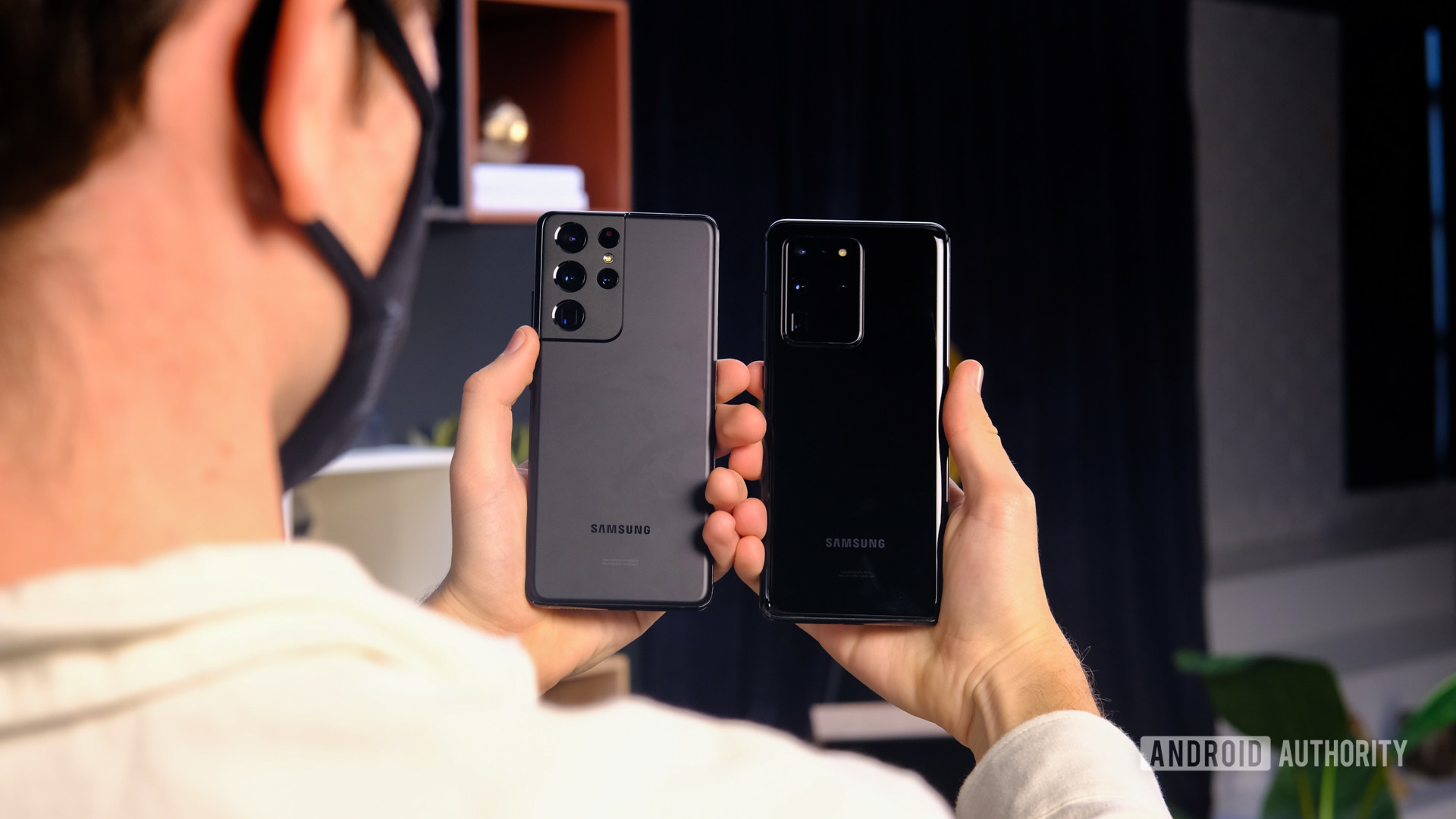
Samsung has refreshed the design of the Galaxy S series almost every year. The S21 series added a distinct look to the rear camera module. The standard Galaxy S21 model also switched from a glass to glasstic design and joined the Galaxy S21 Plus to adopt a flat display as opposed to the curved screens of the Galaxy S20 series.

We feel Samsung will stick to some of these changes as they were welcomed by many users. Both the plastic build and flat panel make for a more durable design. They also probably helped Samsung lower the entry point of the Galaxy S21 flagships and reach that $799 price.

It won’t make sense now for Samsung to hit reverse gear and start using curved displays and glass backs again. Of course, Samsung can always switch up the way it presents the rear camera module and that’s something we expect the company will do on the Galaxy S22 phones.

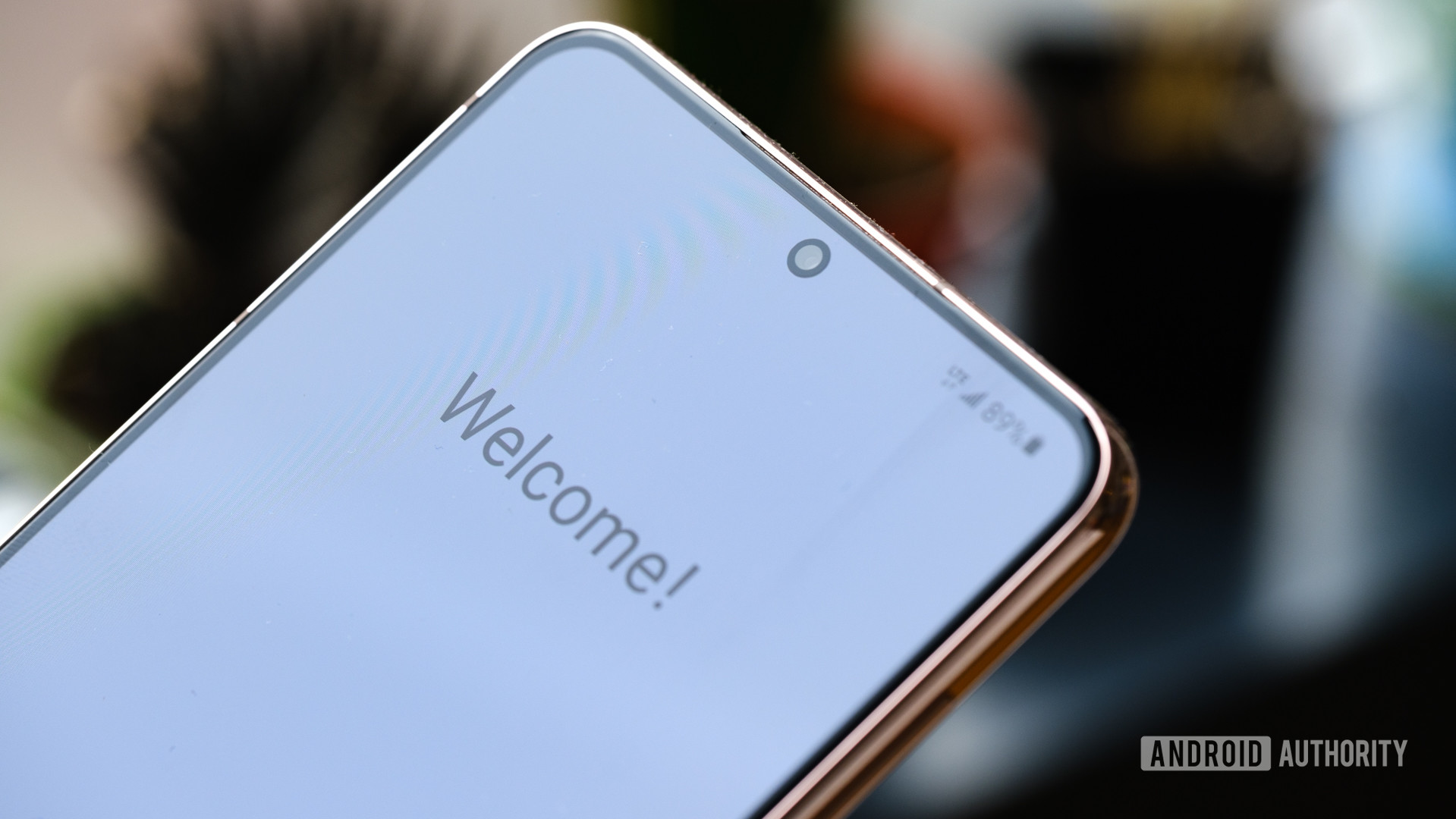
A recent spec leak from Twitter tipster FrontTron suggests the Galaxy S22 devices will skip Samsung’s under-display camera tech that debuted on the Galaxy Z Fold 3. So Samsung could once again use the trusty punch-hole cutout up front.

Specs and features

Samsung Galaxy S21 in front of box

Credit: David Imel / Android Authority

Thanks to the aforementioned tipster, we have a fairly decent idea of some of the key specs of the Samsung Galaxy S22 series. However, since this is a super early leak, we suggest you take it with a grain of salt.

According to the leaker, the vanilla Samsung Galaxy S22 would feature a 6.06-inch LTPS display, while the S22 Plus could come with a 6.55-inch screen. The Galaxy S22 Ultra might be the only model in the series to get an LTPO panel. It’s rumored to retain the same 6.8-inch footprint as the S21 Ultra.

The leak also details some new camera upgrades for the Galaxy S22 trio. The Galaxy S22 and S22 Plus are expected to finally move away from the 12MP main camera and house a 50MP primary shooter. This could be Samsung’s Isocell GN2 sensor that’s capable of producing 12.5MP pixel binned shots. It also features 4K/120fps slow-mo recording, upgraded dual-pixel autofocus, and 480fps video at 1080p.

Twitter tipster Yogesh also suggested that the 50MP sensor used on the Galaxy S22 phones could be an RGBW (red, green, blue, and white) unit. The addition of the white in the pixels should enable better low-light photography. However, we haven’t heard any other leakers back this info just yet.

A 12MP ultra-wide shooter and a 12MP telephoto sensor might accompany the 50MP sensor on both the Galaxy S22 and S22 Plus.

Meanwhile, the Galaxy S22 Ultra’s leaked camera configuration suggests the phone would pack a 108MP main sensor, two 12MP telephoto shooters (up from 10MP on the S21 Ultra), and another 12MP ultra-wide camera. The setup is also rumored to include laser autofocus.

Besides the camera changes, the Samsung Galaxy S22 series will obviously get more grunt under the hood with new SoCs. While the next Snapdragon flagship — reportedly the Snapdragon 898 — should power the series in the US, all eyes are on Samsung’s rumored Exynos 2200 chipset with the AMD GPU. We already know that the new Exynos will bring ray tracing and variable rate shading capabilities to Samsung’s flagships. We’ll just have to wait and see what else is in store when the company finally reveals the SoC, likely later this year.

Related: A history of Samsung’s Exynos chipsets

Interestingly, it looks like Exynos variants could be in limited supply. Twitter tipster FrontTron claimed that there aren’t enough Exynos 2200 chipsets to go around, resulting in Exynos models only being available in a few markets. We’ll need to wait and see about this, as it would mark a major turnaround for Samsung. The company has traditionally launched Snapdragon variants in a couple of markets and Exynos models in the rest of the world.

One particular claim in recent weeks is that Samsung might not use vapor chamber cooling on the S22 family. It’s believed that cost-related reasons are to blame if the phones don’t offer this cooling method, with thermal graphene pads mooted instead. For what it’s worth, iFixit found that there was little difference between the cooling methods.

Elsewhere, the batteries powering the vanilla Galaxy S22 and the S22 Plus might get a slight downgrade this time around. The phones could draw power from 3,800mAh and 4,600 batteries, respectively, as opposed to the 4,000mAh and 4,800mAh batteries on the Galaxy S21 and S21 Plus. The Galaxy S22 Ultra is estimated to have a 5,000mAh battery, the same as the current Ultra model.

More recently, a 3C certification listing spotted by SamMobile points to a Galaxy S22 Plus battery with a 4,370mAh capacity (typical capacity of 4,500mAh) and an S22 Ultra battery with 4,855mAh capacity (5,000mAh typical).

Samsung Galaxy S22: Wishlist

There are a few things we’d love to see Samsung change. Below, you’ll find six things we hope to see with the Samsung Galaxy S22 series. These are all realistic wishes, meaning they are not pie-in-the-sky hopes — it would be totally feasible for Samsung to offer all these changes. Let’s get to it.

Faster wired charging

Samsung Galaxy S21 Plus Charging USB C

Credit: Robert Triggs / Android Authority

Samsung has been way behind the curve for years now when it comes to wired charging speeds. The phones in the Galaxy S21 series all top out at 25W speeds when using a cable, which is less than half of what the OnePlus 9 series offers. In fact, it’s less than what the OnePlus 8 series offered in 2020 and what the OnePlus 7 series offered in 2019.

With more and more companies offering faster wired charging speeds, Samsung simply can’t ignore the trend any longer. Every phone in the Samsung Galaxy S22 series should at least offer 45W wired charging. Thankfully, a leak suggests that 65W charging is being tested for all three Galaxy S22 models

See also: How fast charging really works: Your guide to wireless and wired fast charging

It’s pretty much guaranteed Samsung won’t offer 45W chargers in the boxes of the Galaxy S22 series. That’s unfortunate, but at least people who care about fast charging will have the option. Either way, 25W just doesn’t cut it anymore.

More perks for the Samsung Galaxy S22 Plus

Samsung Galaxy S21 Plus back on table macro

Credit: David Imel / Android Authority

In the past, the differences between the vanilla Galaxy S and its Plus counterpart have been significant. Usually, we see more rear camera lenses, higher resolution displays, more RAM, etc.

That wasn’t the case with the Galaxy S21 series. Aside from a glass back, larger body/display, and slightly bigger battery, the Galaxy S21 and Galaxy S21 Plus are pretty much the same. This isn’t a big problem on its own, but when you factor in that the Galaxy S21 Plus is $200 more expensive, it becomes a real head-scratcher.

Related: Samsung Galaxy S21 Plus review: The typical middle child

We’re going to get more into our hopeful pricing structure for the Samsung Galaxy S22 series in a bit. For now, though, we’ll say that if Samsung continues offering a Plus model, it either needs to add more perks or drop the price. We suggest offering faster wired charging, a higher-resolution display, and a slightly higher-end camera system, along with the glass back and larger battery we saw in the Galaxy S21 Plus.

Otherwise, the price of the Galaxy S22 Plus needs to come down by at least $100. There’s just no reason to spend $200 more to get a slightly bigger phone.

More storage and/or return of microSD slot

MicroSD card slot stock photo 5

Credit: Edgar Cervantes / Android Authority

The phones in the Galaxy S21 series all support recording 8K video. Recording at that quality requires massive amounts of data, about 10MB per second. Even if you decide that’s overkill and stick to 4K recording, your files will still be huge. Yet, strangely, the Galaxy S21 series starts with 128GB of internal storage with no option to expand it.

See also: The best Android phones with expandable memory

We understand why Samsung removed microSD card support from the Galaxy S21 series. It’s not a popular feature for the average consumer, and it makes phones more expensive and trickier to design. However, the company can’t have its cake and eat it too; it can’t remove support for expandable storage without offering higher levels of internal storage as a baseline.

We’re hoping the company will rectify this mistake with the S22. We’d love to see the return of the microSD card slot — that seems like the perfect compromise. If not, though, we want to see 256GB of internal storage as the minimum for the phones. That would allow you to record at least five hours of 8K footage before you start to run out of space (and need to figure out to which cloud service you’re going to save it).

A wider range of color options

Samsung Galaxy S21 vs S21 Plus vs S21 Ultra 2 1

Credit: David Imel / Android Authority

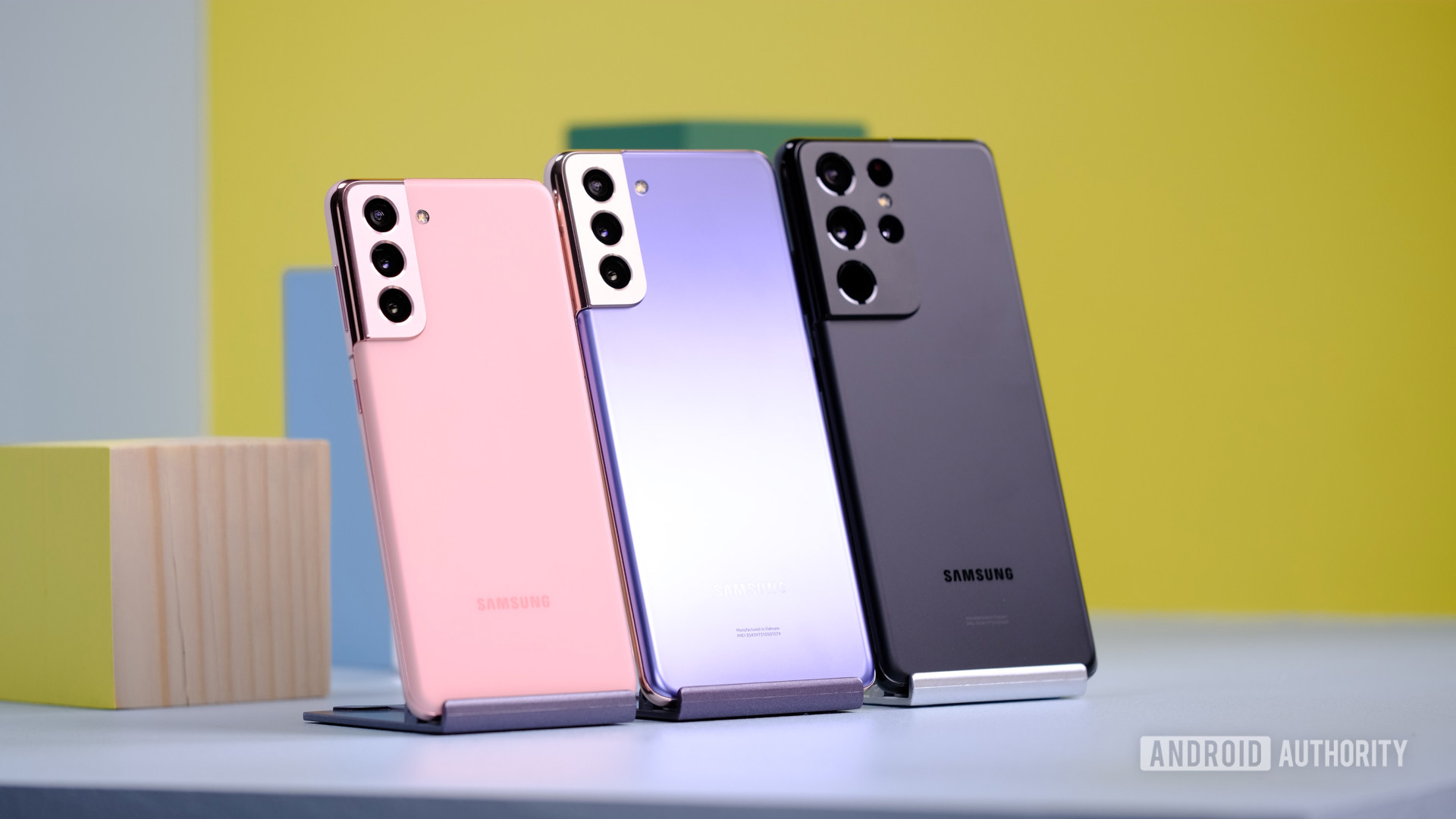
This item on our wishlist is a bit nitpicky. Most Galaxy S fans know that Samsung is offering a whole swath of colorways for the Galaxy S21 series, a few of which you can see in the image above.

While we will agree that Samsung offered many colors, it’s the kind of colors it offers that we hope to see changed with the Samsung Galaxy S22.

See also: Region-exclusive smartphone colors need to stop, please

For example, the vanilla Galaxy S21 comes in four colors: Phantom Gray, Phantom White, Phantom Pink, and Phantom Violet. I don’t know about you, but as a man in his 30s, I don’t really have much interest in the pink or purple ones. So that leaves me with two choices: white or gray. Boring. The Galaxy S21 Ultra is even worse, with your color options being Phantom Black or Phantom Silver (or Navy Blue if you head to Best Buy). Not a whole lot of variety there.

We’d love to see Samsung continue to offer many colors for its phones, but maybe some that run a wider gamut would be cool. I shouldn’t need to choose between boring neutral colors or Easter pastels. There’s plenty of room in there for more options.

Seamless updates
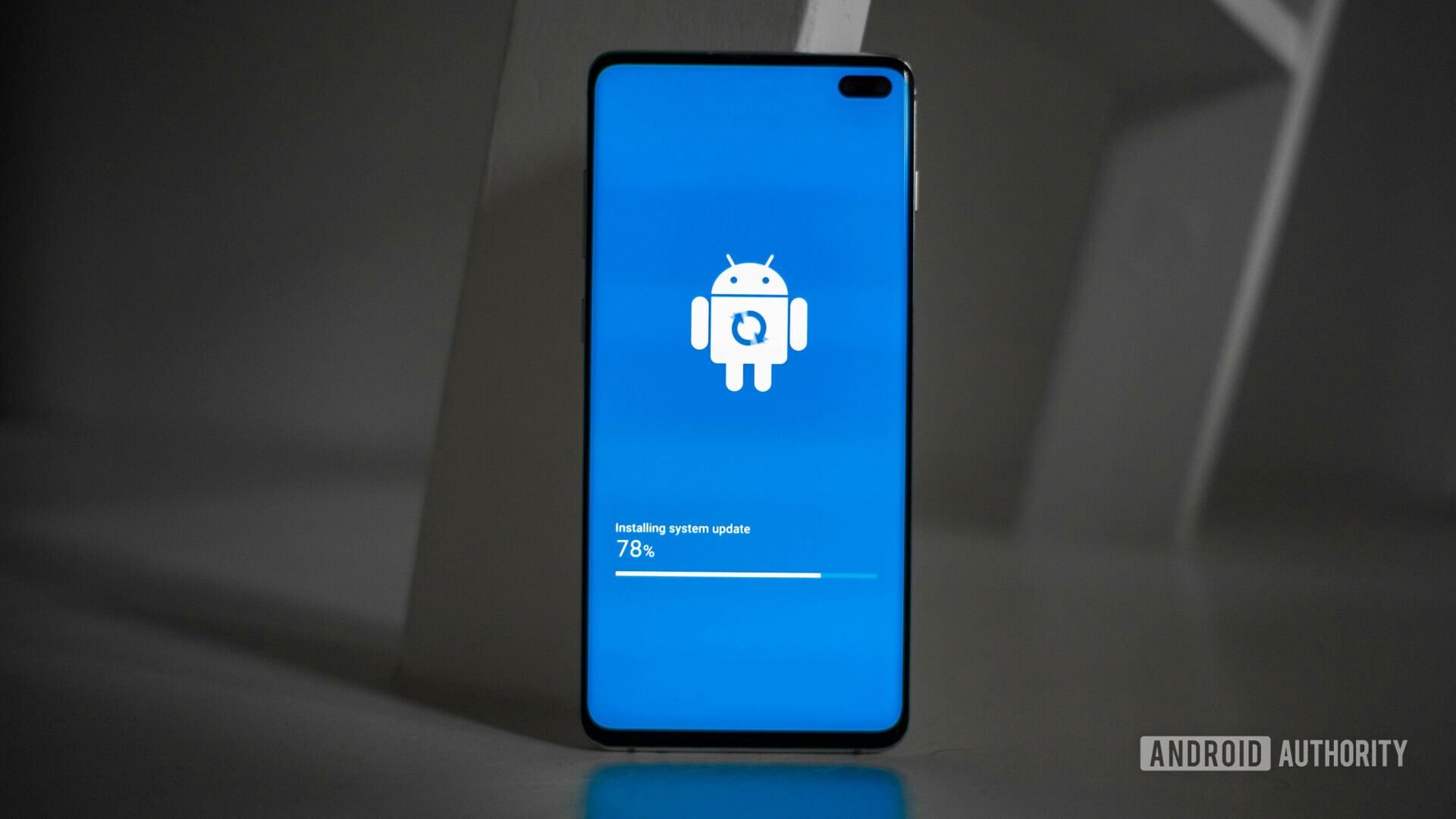
Samsung Galaxy S10 Plus Update

This is one of our biggest complaints with not only the Galaxy S line but all Samsung phones and tablets. When you receive a system update, your Samsung device needs to restart, go through a long series of updates, and then, once it restarts, analyze and optimize all the apps on your phone. The whole process can take anywhere from five to 20 minutes. It’s excessive.

Meanwhile, Pixel phones have seamless updates. This means most of the actual update process happens in the background while the phone is powered on. You can continue to use your phone normally while it’s happening. Once it’s done, a restart that takes the normal length of time finishes it all up. It’s much more user-friendly.

We sincerely hope Samsung ends its ridiculously long update procedure with the Samsung Galaxy S22 series. Not only would it be more convenient, it would help people update more often.

Samsung Galaxy S22 pricing matches Galaxy S21

Samsung Galaxy S21 vs S21 Plus vs S21 Ultra in hand

Credit: David Imel / Android Authority

Samsung nailed the pricing strategy for the Galaxy S21 series. At $799, the vanilla Samsung Galaxy S21 is a perfectly adequate affordable flagship. Meanwhile, at $1,199, the Galaxy S21 Ultra offers pretty much everything a power user could want at a price that’s significantly lower than 2020’s Galaxy S20 Ultra.

Now, we’ve already touched on how the Galaxy S21 Plus was the odd man out in the pricing scheme, but a $999 phone in the lineup makes sense. We hope Samsung sticks to this pricing strategy with the Galaxy S22 series — or at least emulates it as closely as possible.

See also: How the price of Samsung Galaxy S phones changed over the years

This is what Apple has been doing for years. Ignoring the iPhone 12 Mini, the vanilla iPhone 12 starts at $799. The iPhone 12 Pro starts at $999, and the iPhone 12 Pro Max starts at $1,099. Who would’ve thought that what works well for Apple would also work well for Samsung, eh?

Depending on the upgrades we see in the Samsung Galaxy S22 series, these prices might need to increase. However, we hope Samsung does everything it can to avoid that. 2021’s strategy worked very well, and there’s no reason to believe it wouldn’t work well again in 2022.


from Android Authority https://ift.tt/3BdpWOu
Samsung Galaxy A52 5G lands in India for under $500 https://ift.tt/3xofG4t

Samsung Galaxy A52 5G in hand color
Credit: Eric Zeman / Android Authority
  • The Samsung Galaxy A52 5G is now available in India.
  • The mid-ranger lands with an upgraded chipset and a faster OLED screen.
  • Pricing starts at Rs 35,999.

After making its UK debut in mid-August, the Samsung Galaxy A52s 5G is now stretching its legs to a new market. As spotted by Android Central, the phone is now officially available in India.

The phone packs a Snapdragon 778G as its primary upgraded feature, and also gains a 6.5-inch 120Hz AMOLED display. It also wears a quad-camera array on its rear with a 64MP main sensor headlining. It’s joined by 12MP wide-angle, 5MP macro, and 5MP telephoto lenses. A 32MP camera is used for selfie shooting duties.

Powering the Galaxy A52 5G is a 4,500mAh battery with 25W charging support. Buyers also get 128GB of expandable storage, IP67 water and dust resistance, and Android 11 with One UI 3.1 out of the box.

Samsung Galaxy A52 5G: Price and availability in India

Samsung’s latest mid-ranger is now available from Amazon India starting at Rs 35,999 (~$492) for the 6GB version, landing it squarely in the sub-Rs 40,000 market. The 8GB option comes in at Rs 37,499 (~$513). As for colorways, you can have the phone in either Black, White, or Violet.

Samsung Galaxy A52 5G
The Samsung Galaxy A52 5G offers a lot of bang for the buck. It packs a 6.5-inch, 120Hz display, a large 4,500mAh battery that lasts all day, and a 64MP main camera. With 5G on board, it could be a mid-range smash.


from Android Authority https://ift.tt/3zzcrs5

Samsung Galaxy Note 10 carrier models gain August 2021 patch in US https://ift.tt/eA8V8J

Welcome to the Samsung Galaxy Note 10 update hub. Here you’ll find the latest information on updates to the Samsung Galaxy Note 10 and Galaxy Note 10 Plus. We’ll detail the current software versions for each device and alert you if there’s a new update rolling out. Samsung usually pushes out updates to the entire series, but this may vary per variant and carrier.

  • Current stable version: Android 11
  • When will the Samsung Galaxy Note 10 and Note 10 Plus get Android 12? Early to mid-2022 (Estimated)

Latest Samsung Galaxy Note 10 and Note 10 Plus updates

September 1, 2021: Samsung Galaxy Note 10 and Note 10 Plus users in the US running carrier-locked versions are now gaining a new firmware update. Per SamMobile, firmware N97xUSQU7FUH3 brings the August 2021 Android security patch and is currently releasing to Comcast and Xfinity customers. Those on other carriers should also gain the update in due course.

To check if the update’s available for your device head to Settings > Software update and tap on Download and install.

Previous Samsung Galaxy Note 10 and Note 10 Plus updates

  • July 16, 2021: Unlocked Samsung Galaxy Note 10 devices in the US received the July 2021 Android security update. The patch included firmware N97xU1UES6FUF1. Per SamMobile, the patch fixed an Android Auto bug and several other software vulnerabilities.
  • June 9, 2021: Samsung rolled out firmware N97xFXXS7FUEB to the Galaxy Note 10 series in the US and other international markets. Per SamMobile, it brought the June 2021 Android security patch, and numerous bug fixes.
  • April 15, 2021: If you own a Galaxy Note 10 on Verizon, you can look forward to a new update coming your way. The latest update (h/t XDA-Developers) brings a host of camera improvements to the devices. This includes the availability of Pro mode when using the ultrawide lens, Auto-Night Mode, more Portrait backdrop effects, and more. The April 2021 Android security patch is also included.
  • February 25, 2021: Samsung rolled out One UI 3.1 to the Note 10 series in late February, according to SamMobile. The update included firmware version N97xFXXU6FUBD and added several privacy-focused features, such as Private Share and the ability to strip location data from shared images. The update also improved camera performance.
  • January 2021: Stable versions of One UI 3.0 finally rolled out to users on Verizon in January. This was US users’ first taste of Android 11 on their Galaxy Note 10 series devices. Following One UI 3.0’s rollout, Samsung brought the February 2021 Android security update to the phones. Spotted by SamMobile, the update brings firmware version N97xFXXS6EUB2 to the device and patches some security flaws on the device.
  • September 2020: Samsung rolled out the One UI 2.5 update to the Note 10 family (including the Lite and 5G models) in September 2020, SamMobile reported. This version of Samsung’s custom Android skin brought a slew of new features, including Wireless DeX support, new Pro video camera features, added options in Samsung keyboard, and much more. You can view the full list of all major One UI 2.5 features here.

If you’ve spotted a Samsung Galaxy Note 10 update that we haven’t, tip us! Looking for another update? Be sure to visit our Android 11 update tracker.


from Android Authority https://ift.tt/2HeyP14

Tuesday, 31 August 2021

Telegram’s latest update makes unlimited video calls/live streams a reality https://ift.tt/3fCArjG

The Telegram icon on an Honor View 20 on a blue background with a cat and a fish.
Credit: Scott Adam Gordon / Android Authority
  • Telegram’s latest update has brought unlimited participants to video-calling and live streams.
  • It also brings improved forwarding controls and the ability to quickly jump to the next unread channel.

The Telegram team has been hard at work on bringing various features to the service in 2021. Some of the more notable features arriving this year include improved video messages, group video calls, Clubhouse-style voice chats, and improved multimedia tools.

The team has just announced another major update, and the headline feature is that you can have unlimited participants when video calling in a group or live-streaming in a channel. Participants can also raise their hand and contribute to the conversation if you allow them to do so.

Telegram flexible forwarding

Credit: Telegram

We’ve also got so-called “flexible forwarding” in Telegram now, allowing you to show/hide the caption and sender before you hit “forward.” The preview window also lets you change the recipient in case you accidentally tapped the wrong chat.

Another notable addition to Telegram this time is the ability to jump to the next channel. More specifically, when scrolling to the end of one channel, a prompt will appear that allows you to swipe up to enter the next unread channel. Scroll to the end of this channel, and the same prompt will appear once again if you’ve got another unread channel waiting for you.

Other notable additions include larger previews for sticker suggestions, new animated emoji, unread comment counters in channels, and trending stickers.


from Android Authority https://ift.tt/2WHDSBY