For many folks out there, the Samsung Galaxy S series isn’t just a family of Android phones — they are synonymous with the entirety of Android itself. Ask around and you’ll likely find someone you know who will refer to any Android device as a “Galaxy,” even if it’s not made by Samsung. That’s how prevalent the Galaxy S series really is.
Samsung didn’t make the Galaxy S series the biggest name in Android overnight. It gradually gained steam with the line before it took off with the Samsung Galaxy S3 and Galaxy S4, the latter of which being the best-selling Android phone of all time. Since then, Samsung has refined — and completely obliterated — its formula for Galaxy S phones, but the company’s status as the number one name in Android still holds strong.
In 2020, Samsung is poised to take the Galaxy S line to new heights with a new naming scheme, a new ultra-premium variant, and new features with the Galaxy S20 series. Before that happens, we thought we’d go over the history of the Samsung Galaxy S line from its humble beginnings all the way through to today.
Editor’s note: To keep things concise, we’ll be sticking to the core Galaxy S releases. Samsung has released plenty of S series spin-offs (and questionable experiments) over the years — most recently the S10 Lite — but only the core flagships will be represented here.
Samsung Galaxy S: The OG
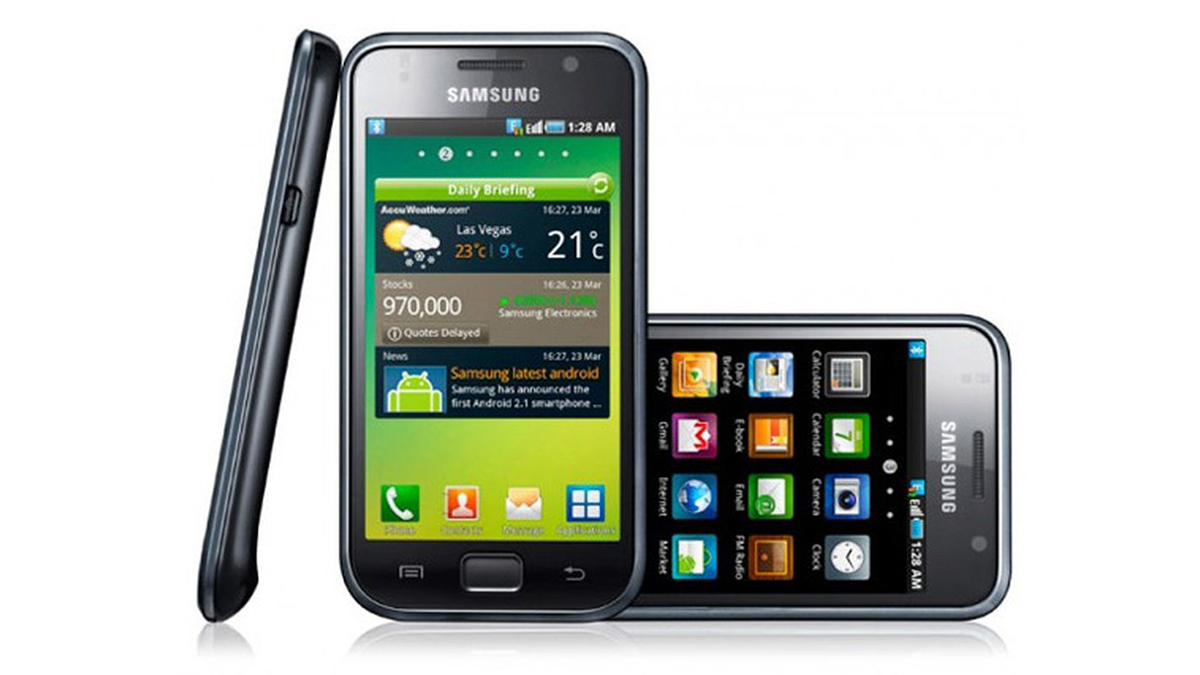
In March of 2010, Samsung officially unveiled the Samsung Galaxy S, the very first entry in the new “S” line. Previously, in 2009, the company had launched the Samsung Galaxy, its very first phone powered by Android.
The Galaxy S was, at the time, one of the most powerful phones on the market. Its graphical processing power outmatched any other Android phone and even trounced the iPhone 3G, which was the most recent Apple phone available at the time. This raw power coupled with an attractive design and slim form-factor pushed the Galaxy S to over 25 million units sold.
Related: Pop Quiz: Was it Samsung or Apple?
However, the Galaxy S suffered greatly from a very confusing release lineup. All in all, there were over two dozen variants of the Galaxy S smartphone, some with different processors, different designs, and even different operating systems. This was incredibly different from Apple’s strategy, which was to release one phone with little variation globally.
Ultimately, though, the Galaxy S was a huge hit for Samsung. It wasn’t long before the company was hard at work at a follow-up.
Samsung Galaxy S fast facts:
- The Galaxy S launched with Android 2.1 Eclair and its final official update was Android 2.3 Gingerbread.
- The highest amount of RAM you could get was 512MB.
- Originally, the phone launched with a Super AMOLED display with a resolution of 800 x 480. However, Super AMOLED panels were in low supply at the time, so eventually, Samsung re-released the device with an LCD panel.
- Here are just a small selection of names of different US variants of the device: Galaxy Proclaim, Galaxy S Showcase, Galaxy Vibrant 4G, Galaxy S Captivate, and, most confusingly, Stratosphere.
- In 2010, the price of the phone was $400, or about $469 in 2020 dollars.
Samsung Galaxy S2: The “more is more” phone
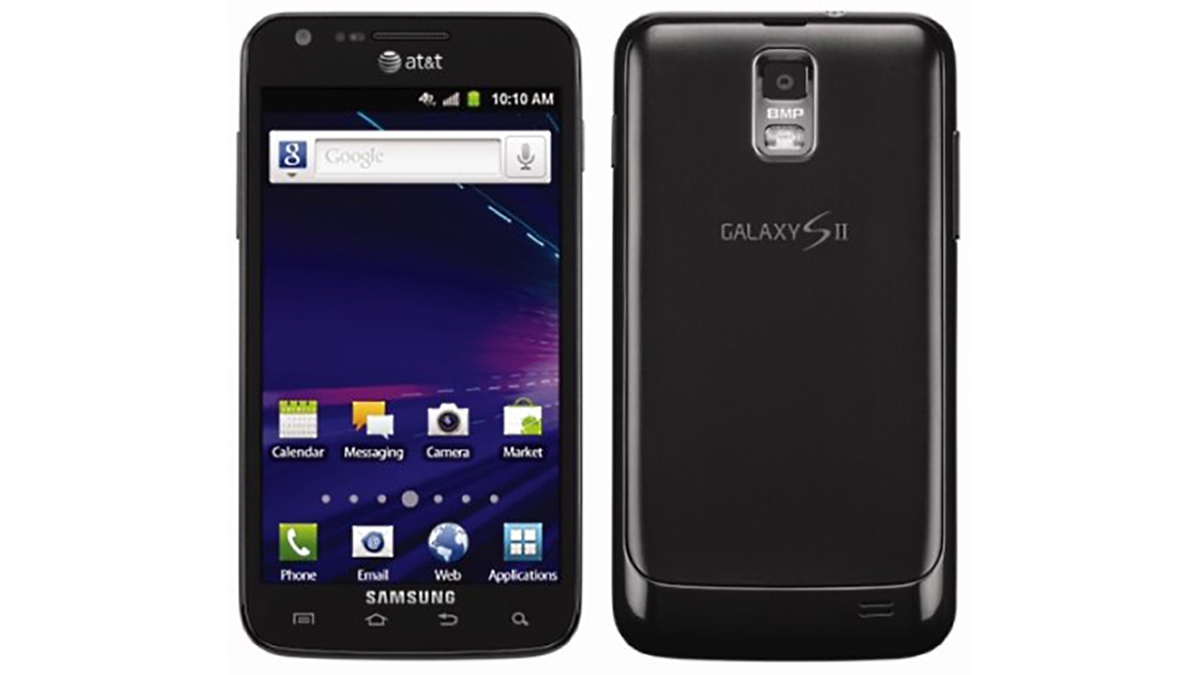
In hindsight, Samsung’s decision to release over two dozen variants of the original Galaxy S phone seems like a poor one. However, it worked out for the company as the phone was a huge success, so Samsung essentially doubled down for the 2011 entry in the series, the Samsung Galaxy S2.
With the S2, not only were there different versions of the device around the globe, but even the three supported major wireless carriers in the United States got completely different devices with different designs and even different names. It was incredibly confusing.
Related: Samsung Galaxy S2 Epic 4G Touch Full Video Review and Hands-on
As such, it’s difficult to talk about the Galaxy S2 as one device. For example, the global version of the S2 featured a large home button at the bottom with two capacitive buttons flanking it on either side, similar to the original Galaxy S. Meanwhile, North American versions such as the AT&T variant (shown in the image above) feature four capacitive buttons in a row. The Sprint variant didn’t have an NFC chip while all other US variants did, and the T-Mobile variant had a unique processor (the Qualcomm Snapdragon S3). The AT&T variant even had a significantly smaller display as compared to the Sprint and T-Mobile versions. It was madness.
Luckily for Samsung, all this confusion didn’t hurt its overall bottom line. The Galaxy S2 sold even better than the original Samsung Galaxy S, clocking in at over 40 million units sold. The company had clearly struck gold with its Galaxy S line, which it would prove in spades with the next two entries in the series.
Samsung Galaxy S2 fast facts:
- The Galaxy S2 launched with Android 2.3 Gingerbread and its final official update was Android 4.1.2 Jelly Bean.
- Samsung sold 3 million units of the Galaxy S2 in just 55 days after it launched.
- There were variants of the S2 that featured a Qualcomm chipset, making them the first Galaxy S phones to have one.
- In the third quarter of 2011, Samsung overtook Apple in smartphone sales for the first time, claiming 23.8% of the market (Apple had 14.6% during the same period).
- In 2011, the price of the phone was $550, or about $626 in 2020 dollars.
Samsung Galaxy S3: The first true ‘iPhone killer’

With Samsung overtaking Apple in smartphone sales in 2011 based largely on the success of the Galaxy S2, all eyes were on Samsung in 2012 as it prepared to launch the new entry in the series. Little did anyone know that the Galaxy S3 would go on to sell 70 million units, making it the second-best-selling Android smartphone of all time. In fact, the only Android phone that sold more units than this one was another Galaxy S phone (which we’ll get to in a minute).
Thankfully, with the Galaxy S3, Samsung started to abandon its strategy of releasing dozens of confusing variants of the device. Sure, it still launched way too many versions of the Galaxy S3, but it wasn’t as problematic and excessive as the Galaxy S2 and original Galaxy S.
Related: Samsung Galaxy S3 review: The best smartphone ever made?
With the Galaxy S3, Samsung was finally on even footing with Apple. Remember that the first iPhone came out in 2007, giving the Cupertino company a significant head start in the premium smartphone market as compared to Samsung. But the iPhone 5, Apple’s smartphone that launched the same year as the Galaxy S3, sold about the same amount of units as the S3. This made the Galaxy S3 the first bonafide “iPhone killer.”
In 2012, Samsung posted record-setting profits, thanks largely to the success of the Galaxy S3. In the years to come, it will be impossible to talk about the best smartphones of all time without mentioning this one.
Samsung Galaxy S3 fast facts:
- The Galaxy S3 launched with Android 4.0.4 Ice Cream Sandwich and its final official update was Android 4.4 KitKat.
- Samsung sold 10 million units of the Galaxy S3 in just 55 days after it became available in stores.
- Some Galaxy S3 units only had 1GB of RAM, while others had 2GB. One variant even had 1.5GB. This and other discrepancies in internal hardware caused a lot of confusion in the custom ROM community as specific ROMs would only work on specific devices.
- Samsung would have sold even more Galaxy S3 units if it didn’t face a manufacturing problem with a blue colorway. A defect in the production process resulted in Samsung needing to destroy hundreds-of-thousands of plastic back panels which caused a shortage in supply of the popular device.
- In 2012, the price of the phone was $599, or about $667 in 2020 dollars.
Samsung Galaxy S4: The reigning champion

When you talk about the Samsung Galaxy S4, you are talking about a pillar of its industry. From a sales perspective, no other Android phone has even come close to records set by this device. It sold 20 million units in its first two months, which is just insane. As a comparison, the Samsung Galaxy S9 sold less than that over its entire first year.
Samsung did the smartest thing it could with the Galaxy S4: it simply took the design aesthetic, hardware, and features of the incredibly successful Galaxy S3, and refined them. In fact, aside from being slightly bigger than the Galaxy S3 and with a redesigned home button, the two devices look remarkably similar.
Related: Samsung Galaxy S4 review
The Galaxy S4 was also, thankfully, the first phone in the Galaxy S line to launch in different countries with similar specs and design across all of them. Sure, there were still plenty of differences, but you could finally use the word “cohesive” to describe a Galaxy phone line without being laughed out of the room.
The only real downside to the Galaxy S4 was that Samsung went a little too crazy with adding new features. Bloatware was a huge problem for the device, and the company spent more time than it should have on gimmicky features such as Air Gesture, which allows you to scroll through your phone without needing to physically touch the display. Samsung would soon abandon this feature and others that debuted with the Galaxy S4.
Samsung Galaxy S4 fast facts:
- The Galaxy S4 launched with Android 4.2.2 Jelly Bean and its final official update was Android 5.0.1 Lollipop.
- Samsung sold 80 million units of the Galaxy S4. It is the best-selling Android phone of all time and the best-selling Samsung phone of all-time.
- The Galaxy S4 was the first in the line to ship without an FM radio built-in. Samsung decided to stop including this feature due to people’s increased reliance on online streaming rather than traditional radio.
- At Google I/O 2013, Google and Samsung launched the Google Play Edition of the Galaxy S4. It had an unlockable bootloader and shipped with stock Android. You could buy it right from the Google Play Store.
- In 2013, the price of the phone was $640, or about $702 in 2020 dollars.
Samsung Galaxy S5: The end of an era

Here at Android Authority, our readers love the Samsung Galaxy S5. Just read through the over 230 comments on this post to see how much our readers love this phone, despite it being completely outdated at this point.
One of the biggest reasons this phone is so popular is because it’s the last of its kind as far as the classic Galaxy S design goes. The S5 is the last in the series to feature a plastic removable backplate, which gave users easy access to the removable battery, among other internals. It’s also the last “durable” phone in the Galaxy S line. Although Samsung would continue to offer Active devices in the Galaxy S line, the Galaxy S5 didn’t really need the distinction (this didn’t stop Samsung from releasing a Galaxy S5 Active, though).
Related: Samsung Galaxy S5 review
Unfortunately for Samsung, the Galaxy S5 represented a different kind of end: the end of growth. Although the Galaxy S5 was a sales monster by today’s standards, Samsung reportedly sold 40% fewer units of the S5 than it did of the S4. This resulted in a massive drop in market share as well as a management shake-up at Samsung. That’s one of the big reasons why there ends up being such a dramatic shift between the design of the Galaxy S5 and the eventual Galaxy S6.
In hindsight, the drop in sales for the Galaxy S5 wasn’t entirely Samsung’s fault. The smartphone boom of the early 2010s was on the decline. There were simply fewer people around who were buying their first smartphone at this point, which Samsung should have done a better job anticipating.
Samsung Galaxy S5 fast facts:
- The Galaxy S5 launched with Android 4.4.2 KitKat and its final official update was Android 6.0.1 Marshmallow.
- A bug in some Galaxy S5 units (particularly those sold through Verizon) caused the camera to fail and then cease functioning. Samsung eventually affirmed the issue and gave users the option of getting a free replacement device.
- The majority of Galaxy S5 units came with the Qualcomm Snapdragon 801 processor. This was the first time an 800-series processor was included with a Galaxy S device. Going forward, every phone in this family (and the Galaxy Note family) would come with an 800-series variant.
- The Galaxy S5 was also the first phone in the line with a fingerprint sensor. However, critics said the sensor was inconsistent, especially when compared to the competition (most notably Apple, which included a fingerprint sensor for the first time on its iPhone 5S, released in the prior year).
- In 2014, the price of the phone was $650, or about $702 in 2020 dollars.
Samsung Galaxy S6 and S6 Edge: The awkward transitions

With the disappointing sales of the Galaxy S5, Samsung needed to reinvent the line. Not only did it give the Galaxy S design a dramatic overhaul in 2015 with the Galaxy S6, but it also did something it had never done before: release two different models. Not content with that, it eventually even dropped a third model later in 2015.
Let’s start with the design. In an effort to make the Galaxy S line look and feel more premium, Samsung abandoned the removable plastic backing of previous phones and went with an all-glass back. Additionally, the S6 featured a unibody chassis made of metal which further emphasized Samsung’s high-end ambitions.
Not content to stop there, Samsung simultaneously introduced a different variant: the Samsung Galaxy S6 Edge. This device looked very similar to the normal Galaxy S6 but featured curved glass on either side of the display. Samsung had previously tested this idea with the Galaxy Note Edge, which featured curved glass on just the right side of the display.
Related: Samsung Galaxy S6 review
These phones both came out in March of 2015. Later, in August, Samsung unveiled the Samsung Galaxy S6 Edge Plus. This would represent the first “Plus” model in the Galaxy S family (even though a new Plus model wouldn’t come for two more years). As one would expect, the S6 Edge Plus was essentially a bigger version of the regular S6 Edge.
Samsung never revealed a final tally of how many Galaxy S6 phones it sold. However, most analysts agree that the phone didn’t sell as well as the Galaxy S5 and Samsung even felt the need to lower the retail pricing of the S6 and S6 Edge only a few months after they launched. This is why, unfortunately, the Galaxy S6 will forever be seen as an awkward transition device. Thankfully, things get better for Samsung the following year.
Samsung Galaxy S6 fast facts:
- The Galaxy S6 launched with Android 5.0.2 Lollipop and its final official update was Android 7.0 Nougat.
- For some reason, even with the new all-glass design of the Galaxy S6, both the S6 and the S6 Edge were not water-resistant. This was strange because the Galaxy S5 was rated at IP67 for both water and dust. The Galaxy S6 Edge Plus also wasn’t IP certified, but Samsung did incorporate water-resistance.
- Samsung Pay also debuted at the launch of the Galaxy S6. However, it was the middle of 2015 before it was actually available for the public to use on the new line of smartphones.
- Due to the new all-glass design of the Galaxy S6, Samsung removed the ability for users to upgrade their internal storage through the use of microSD cards as well as swap out batteries. Thankfully, the former would make a comeback the following year, but the latter hasn’t been back since.
- In 2015, the price of the Galaxy S6 was $600, or about $648 in 2020 dollars. The price of the Galaxy S6 Edge was $700, or about $755 in 2020 dollars.
Samsung Galaxy S7 and S7 Edge: The last of their kind

With the Galaxy S6 family, Samsung had made a few mistakes. It took away the microSD slot and didn’t incorporate any IP certification. It introduced an Edge variant that cost $100 more than the regular variant but didn’t really justify that price hike. It also released a bigger variant of the S6, but not until August when it launched the Samsung Galaxy Note 5.
With the Samsung Galaxy S7 line, the company fixed a lot of those problems. Rather than launch two devices of the same size at the same time, it made the Galaxy S7 Edge slightly bigger than the Galaxy S7 — not quite earning a “Plus” moniker, but at least the size difference would help justify the increase in cost. It also brought back the microSD card slot and earned an IP68 certification for all the devices in the S7 line.
Related: Samsung Galaxy S7 review
It kept the all-glass design of the S6, though, and also kept the overall Galaxy S front panel design that had carried on since the very beginning: Samsung logo at the top and physical home button at the bottom. This would be the end of this trend, however, as the next phone in the line would do away for good with the iconic Galaxy S look.
By fixing most of the issues of the Galaxy S6 (the removable battery never did make a comeback), Samsung was able to turn the tide as far as smartphone sales go. Combined, the Galaxy S7 and S7 Edge shipped about 55 million units, which is actually pretty good when you consider the best-selling Android phone of all time shipped 80 million units.
Samsung Galaxy S7 fast facts:
- The Galaxy S7 launched with Android 6.0.1 Marshmallow and its final official update was Android 8.0 Oreo.
- A feature lost from the Galaxy S7 line that’s never made a comeback is the IR blaster. This enabled you to use your smartphone as a universal remote control for your TV and entertainment center components. Samsung had left the IR blaster out of the Galaxy S6 Edge Plus, too, but it was still present on the S6 and S6 Edge.
- Strangely, the Galaxy S7 line kept the already-outdated micro-USB port for charging and data transfer. Many other Android phones had already moved on to the USB-C standard by this point so it’s not clear why Samsung felt the need to hold on to micro-USB.
- To coincide with the 2016 Summer Olympics, Samsung released special editions of the Galaxy S7 Edge with a blue colorway and color accents based on the design of the Olympic rings. Nearly every Olympic athlete participating in the games that year got a Galaxy S7 Edge to keep.
- In 2016, the price of the Galaxy S7 was $669, or about $713 in 2020 dollars. The price of the Galaxy S7 Edge was $779, or about $830 in 2020 dollars.
Samsung Galaxy S8 and S8 Plus: The big mistake

In 2017, Samsung was in a bad spot. Despite the success of the Galaxy S7, the Galaxy Note 7 — launched in August of 2016 — had a very serious problem of sometimes exploding. Even though the Galaxy S7 line had fixed the problems of the S6 line and sold really well, Samsung was now on (literal) damage control at the start of 2017.
As such, the Samsung Galaxy S8 line had the deck stacked against it from the beginning. Even if that hadn’t been the case, though, Samsung still made a big mistake with the S8 line that caused it to receive negative press, which was moving the fingerprint sensor to the back of the device.
To be clear, moving the fingerprint sensor to the back wasn’t a bad idea in itself. But Samsung opted to put the sensor next to the rear camera lens, offset from the middle. Not only was this too high up the back of the device for comfortable use but it caused people to mistakenly place their finger on the camera lens rather than the sensor itself. It was just a bad call all around.
Related: Samsung Galaxy S8 and Galaxy S8 Plus review: Almost to Infinity
Thankfully, Samsung did make a bunch of other really good decisions with the Galaxy S8 family. It abandoned the Edge branding (finally) and simply launched two devices: the Galaxy S8 and the larger Galaxy S8 Plus. The Plus moniker made more sense from a marketing perspective (the device is bigger with some more stuff) and Samsung’s price hike for the model was easier to explain to consumers.
By moving the fingerprint sensor to the back, the Galaxy S8 became the first Galaxy S phone to not have a home button at the bottom of the display. This was a bold (but necessary) move and the phone looked great with its neat-and-trim bezels.
Samsung never released official sales numbers for the S8 line, but industry analysts are in agreement that they didn’t sell quite as well as the Galaxy S7 line. It’s not clear if the Note 7 disaster or the bad reviews related to the fingerprint sensor were to blame, but the Galaxy S8’s lack of runaway success probably gave Samsung a bit of a scare.
Samsung Galaxy S8 fast facts:
- The Galaxy S8 launched with Android 7.0 Nougat and its final official update was Android 9 Pie.
- The Galaxy S8 was the first commercial smartphone to launch with Bluetooth 5.0 support. Although we’ve seen Bluetooth 5.2 launch since then, this is still the primary Bluetooth standard on modern smartphones.
- Samsung also introduced its voice assistant Bixby alongside the Galaxy S8 family. This competitor of Google Assistant and Amazon’s Alexa would be easily accessible on the Galaxy S8 through the new Bixby hardware button. The inclusion of the button was a divisive move.
- After the release of the phones, a video went viral that showed how the facial recognition software on the Galaxy S8 line could be fooled by a photograph. Samsung’s response to the video was to say that facial recognition should not be used as a secure biometric solution.
- In 2017, the price of the Galaxy S8 was $750, or about $782 in 2020 dollars. The price of the Galaxy S8 Plus was $850, or about $887 in 2020 dollars.
Samsung Galaxy S9 and S9 Plus: The big fix

As it did in 2016 with the Galaxy S7, in 2018 Samsung needed to fix the mistakes it had made with the Galaxy S8. With the Samsung Galaxy S9 and S9 Plus, Samsung fixed the biggest pain point of the S8 family: the placement of the rear-mounted fingerprint sensor. Now, the sensor was more towards the middle of the back and centered as it should be.
Samsung also, for the first time ever in the Galaxy S line, added a second rear camera lens to the back of the Galaxy S9 Plus (the vanilla Galaxy S9 still had a single sensor). It also made the top and bottom display bezels significantly smaller as well as offering the usual processing upgrades.
Related: Samsung Galaxy S9 and S9 Plus review: Top-notch notch-less
However, no matter how you sliced it, the Galaxy S9 looked a lot like the Galaxy S8. Overall, the Galaxy S9 ended up being more about iterative fixing rather than any kind of sweeping change. That’s not necessarily a bad thing (as we saw with the Galaxy S4), but smartphone buyers wouldn’t be too keen to line up around the block for a phone that cost more than last year’s while looking about the same. Thankfully, Samsung lowered the starting prices for the S9 family as compared to the S8 family, making 2018 one of the very few years that’s ever happened.
The one thing Samsung did improve upon with the Galaxy S9 family was the camera. The addition of a second lens on the Galaxy S9 Plus brought the Galaxy S line up-to-date with the competition. However, primary competitor Huawei launched the P20 Pro shortly after Samsung launched the Galaxy S9, and Huawei’s device had a whopping three camera lenses. Our review of the P20 Pro was even subtitled “the Galaxy S9 killer.”
The Galaxy S9 and S9 Plus proved that Samsung couldn’t rest on its laurels anymore. The devices sold well enough, but not as well as the Galaxy S8, which, of course, didn’t sell as well as the Galaxy S7. Samsung needed to put some real innovation in its next Galaxy S device if it wanted to stop the bleeding.
Samsung Galaxy S9 fast facts:
- The Galaxy S9 launched with Android 8.0 Oreo and its final official update will likely be Android 10. The stable version of Android 10 is expected to roll out in early 2020.
- Samsung opted to not increase the battery sizes of the Galaxy S9 family as compared to the Galaxy S8 family. This decision was likely rooted in the problems with the Galaxy Note 7 battery explosions.
- In 2016, Apple launched the iPhone 7, which didn’t have a headphone jack. Over the following years, many Android OEMs followed suit by dropping the 3.5mm port. There was a lot of concern that Samsung would do the same, but every one of its 2018 flagships, including the Galaxy S9, launched with the popular legacy port. Its 2019 flagships, however, wouldn’t be able to make the same claim.
- By the end of 2018, Samsung would launch One UI, its new Android skin. It rolled out to the Galaxy S9 family as part of the Android 9 Pie upgrade. One UI replaced Samsung Experience, which itself replaced TouchWiz. Most critics agree that One UI is Samsung’s best-ever effort in the Android skin game.
- In 2018, the price of the Galaxy S9 was $720, while the Galaxy S9 Plus was $840.
Samsung Galaxy S10, S10 Plus, and S10e: The ‘e’ factor

The Galaxy S9 and S9 Plus proved something to Samsung: if it released iterative upgrade smartphones that looked and functioned a lot like last year’s model, sales would suffer. The company must have heard this loud and clear because it basically threw out the rule book in 2019 with the launch of the Galaxy S10 family.
For the first time ever, there would be a whopping four devices in the S10 family. The primary two would remain the Galaxy S10 and Galaxy S10 Plus, but Samsung also launched a new high-end model called the Samsung Galaxy S10 5G as well as an entry-level model called the Samsung Galaxy S10e. Each model had the latest Qualcomm Snapdragon 855 chipset, but differing build materials, cameras, and internal specs would allow each device to hit different price points, anywhere from $749 at the low end all the way to $1,399 at the high.
Related: Samsung Galaxy S10 Plus review: Almost apex
In addition to these new models, Samsung revamped the entire design aesthetic of the Galaxy S family. For the first time, it used punch-hole cutouts on the display to house the front-facing camera sensors. This, combined with the inclusion of in-display fingerprint sensors (or, in the case of the Galaxy S10e, a side-mounted sensor), allowed for the front of the phone to be nearly all display.
On the back, even the cheapest variant of the lot had two rear-facing camera sensors. The Galaxy S10 5G had three sensors plus a ToF sensor, making it a photography beast.
Related: Samsung Galaxy S10e review: Still the best Galaxy S10 for most people
Even with all these upgrades, Samsung still kept true to its roots: every phone in the line had a headphone jack, microSD card support, and an IP rating against water and dust. In a way, the Galaxy S10 family represents the apex of the Galaxy S line, including nearly everything fans love about the phones.
The Galaxy S10 line isn’t finished yet, so sales numbers aren’t easy to come by, but all accounts support the idea that Samsung sold more of the S10 family than it did the S9 family. The question now remains: can Samsung keep that trend going into 2020?
Samsung Galaxy S10 fast facts:
- The Galaxy S10 launched with Android 9 Pie and its final official update will likely be Android 11, which we expect to see land on S10 devices starting in early 2021.
- With a starting price of $899 for the vanilla Galaxy S10, the S10 line officially became more than twice as expensive as the original Galaxy S, which launched at $400 in 2010.
- Samsung touted that the ultrasonic fingerprint sensor in the Galaxy S10 line would be superior as compared to the optical sensors in competitor devices. However, a flaw in the ultrasonic sensors made the phones easily accessible to hackers, causing a big security hole for Samsung’s phones. Samsung quickly released a software patch that fixed the problem.
- The S10 Plus has the distinction of offering the most internal storage of any Galaxy S phone. If you have the cash, you can get a Galaxy S10 Plus with a whopping 1TB of internal storage. You can even expand on that with up to a 512GB microSD card, bringing the possible internal storage to 1.5TB!
- In 2019, the price of the Galaxy S10 was $899, while the Galaxy S10 Plus was $999. The Galaxy S10e started at $749 while the Galaxy S10 5G started at $1,299.
Samsung Galaxy S20, S20 Plus, and S20 Ultra: The leaps of faith

Very soon, Samsung will officially launch the next entries in the Galaxy S series. This will be a big year for Samsung in which the company will take a lot of chances with its flagship line.
The first big change on the way is the name. Instead of logically going to 11 for the new Galaxy S family, Samsung is skipping to 20. That means we can expect a Samsung Galaxy S20 rather than a Galaxy S11. There are a few theories as to why Samsung might do this, but the most pragmatic reason is to line the Galaxy S series up with the year of its release: the S20 in 2020, the S21 in 2021, etc.
The next big change is that Samsung is likely abandoning its very-short-lived “e” variant. All rumors point to there not being a Galaxy S20e, which is unfortunate. Instead, Samsung will likely swing for the fences with a mega-high-end variant called the Samsung Galaxy S20 Ultra. This device will usurp the Galaxy S20 Plus to become top dog when it comes to specs and features.
Related: Samsung Galaxy S20 series: Everything we know so far
Finally, Samsung appears to be putting much of its energy in making the Galaxy S20 cameras some of the best we’ve ever seen on smartphones. The S20 Ultra is expected to have a 108MP primary sensor, a 5x optical periscope zoom system, and the capability of 100x zoom using digital methods. We won’t know for certain until we use it for ourselves, but the Galaxy S20 Ultra camera could be the best in its class when it lands.
Essentially, Samsung is betting big on the Galaxy S series moving forward. If it’s going to continue to be the biggest name in Android, it needs to max-out the specs and create sexy, exciting designs for its smartphones. Time will tell if the Galaxy S20 series succeeds on this front, but Samsung has proven over the years that it is full of surprises.
There you have it, the complete history of the Samsung Galaxy S line up until now! Which phone was your all-time favorite? Sound off in the comments below.
More posts about Samsung


from Android Authority https://ift.tt/36N2wzW


