It’s never been easier to pick up a smartphone that takes great pictures. There are plenty of handsets that offer very good cameras both on paper and out in the real world. But deciding which is the very best is a little trickier. For that, you need a big batch of samples for an in-depth camera shootout.
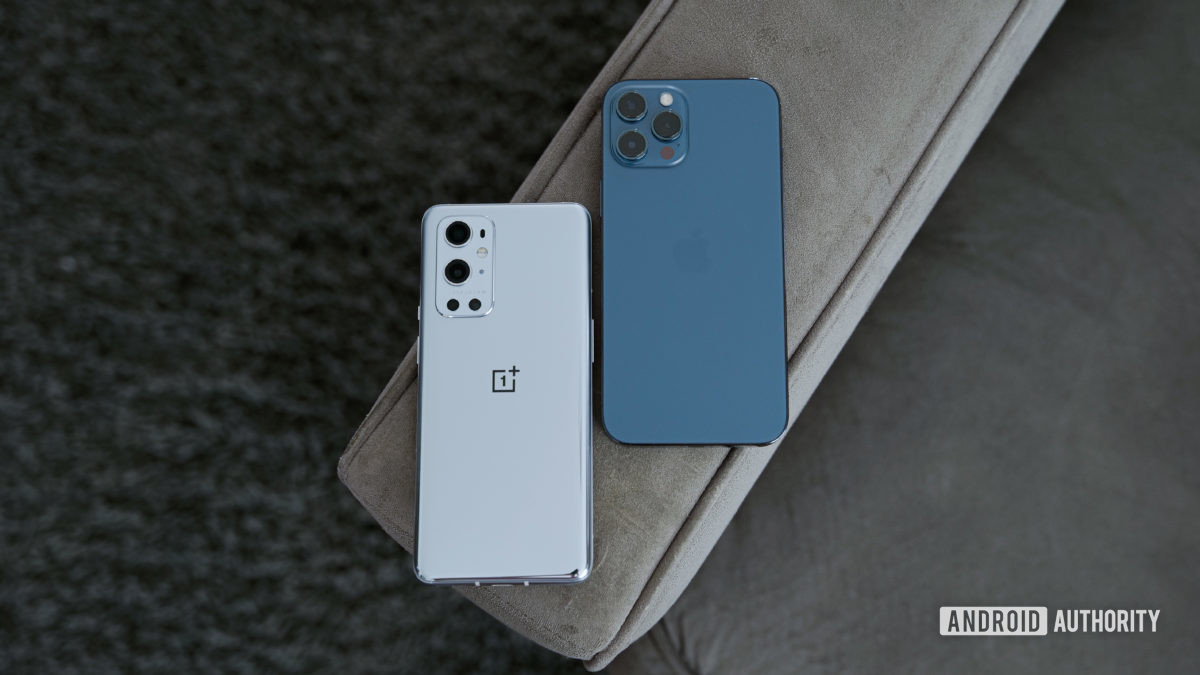
For today’s best-of-the-best shootout we have the Apple iPhone 12 Pro Max, OnePlus 9 Pro, Samsung Galaxy S21 Ultra, and Sony Xperia 1 III. While there are other great candidates out there beyond this quartet, these devices rank highly among the best camera phones of 2021 so far. We’ve installed the latest updates on each model to make sure we’re getting the most up-to-date camera experience.
Let’s jump right in and see which phone comes out on top. If you want to take a closer look at the snaps themselves, you’ll find them in this Google Drive folder.
See also: The best Android phones you can buy
Camera comparison specs
| Apple iPhone 12 Pro Max | OnePlus 9 Pro | Samsung Galaxy S21 Ultra | Sony Xperia 1 III | |
|---|---|---|---|---|
| Main | 12MP ƒ/1.6 aperture 1.7µm pixels IBIS, Dual Pixel PDAF |
48MP ƒ/1.8 aperture 1.22µm pixels, 1/1.43" sensor OIS, Omnidirectional PDAF |
108MP ƒ/1.8 aperture 0.8µm pixels 1/1.33" sensor OIS, PDAF |
12MP ƒ/1.7 aperture 1.8µm pixels 1/1.7" sensor OIS, Dual Pixel PDAF |
| Wide angle | 12MP ƒ/2.4 aperture 1/3.6” sensor |
50MP ƒ/2.2 aperture 1.0µm pixels 1/1.56" sensor AF |
12MP ƒ/2.2 aperture 1.4µm pixels 1/2.55” sensor Dual Pixel PDAF |
12MP ƒ/2.2 aperture 1/2.6" sensor Dual Pixel PDAF |
| Zoom | 2.5x optical zoom 12MP ƒ/2.2 aperture 1.0µm pixels 1/3.4” sensor OIS, PDAF |
3.3x optical zoom 8MP ƒ/2.4 aperture 1.0µm pixels OIS, PDAF |
3x optical zoom 10MP ƒ/2.4 aperture 1.22µm pixels 1/3.24” sensor OIS, Dual Pixel PDAF |
2.9x / 4.4x optical zoom 12MP ƒ/2.3 / ƒ/2.8 aperture 1/2.9" sensor OIS, Dual Pixel PDAF |
| 4th lens | Monochrome 2MP ƒ/2.4 aperture |
10x optical zoom 10MP ƒ/4.9 aperture 1.22µm pixels 1/3.24" sensor OIS, Dual Pixel PDAF |
||
| AF | 3D Time-of-Flight LiDAR | Laser autofocus | Laser autofocus | 0.3MP 3D Time-of-Flight |
| Selfie | 12MP ƒ/2.2 aperture 1/3.6" sensor |
16MP ƒ/2.5 aperture 1.0µm pixels 1/3.06" sensor |
40MP ƒ/2.2 aperture 0.7µm pixels 1/2.8” sensor PDAF |
8MP ƒ/2.0 aperture 1.12µm pixels 1/4" sensor |
There’s a wide variety of sensor and lens configurations across these smartphones but all offer the essentially standard ultra-wide, main, and zoom setup. Interestingly, the iPhone 12 Pro Max and Xperia 1 III offer the smallest main and ultra-wide sensors which, in theory, should present inferior dynamic range and detail capture, particularly in tougher lighting conditions. OnePlus and Samsung also employ pixel-binning technology in their cameras, so their main cameras actually output 12MP images just like the other two phones but benefit from more imaging data. OnePlus also employs this technique for its ultra-wide camera, which also happens to be the largest sensor found in all these ultra-wide cameras by quite a margin.
But perhaps the most interesting lens out of all these phones is the Sony Xperia 1 III’s dual focal length periscope zoom camera. Unlike Samsung which uses two separate cameras, Sony offers two optical zoom levels (2.9x and 4.4x) from a single sensor, thanks to mechanical moving parts. This results in two different focal lengths and apertures, somewhat like a true optical zoom lens from a DSLR camera. Still, Samsung offers the longest range optical zoom out of the bunch due to its 10x periscope camera.
It’s also worth noting that the OnePlus 9 Pro is the slightly more affordable option here, so it will be interesting to see how well this phone performs.
Without further ado, let’s dive into some pictures.
Daylight colors
The above shots have an easy to identify white point, enabling all four cameras to recreate the scenes with highly accurate colors. There’s no obvious oversaturation or obscene color tint to be seen here and all four do a very good job. Being picky, we can see that the iPhone 12 Pro Max targets a slightly higher exposure and tints its greens slightly more towards the yellows in both pictures. It’s a bit unrealistic but looks livelier. The Sony Xperia 1 III is the most subdued of the four in the roadside picture, with a flatter image and toned-down highlights that are the truest to life but arguably a little dull. The OnePlus 9 and Galaxy S21 Ultra sit somewhere in-between, erring on the side of realism with a little extra pop. The OnePlus 9 Pro’s sky tone is also slightly off due to a slightly purple tint.
Photography terms explained: ISO, aperture, shutter speed, and more
The lizard figurine doesn’t have an obvious white point and so we see the phones perform quite differently. Apple and Sony nail much more realistic colors. Again, the iPhone tints its greens a little towards yellow but is otherwise the best of the group for tonal accuracy. OnePlus and Samsung struggle with the abundance of greens, oversaturating their images as a result. They’re still OK pictures but this confirms our earlier assumption that these two phones are the most likely to apply heavier color processing to their images.
Our final shot of the field showcases a more neutral color pallet for Samsung and Sony, slightly warmer for Apple, and the heaviest dose of saturation applied by OnePlus.
Color ranking:
- Sony Xperia 1 III: Accurate colors that are incredibly true to life. White balance holds up well in trickier shots.
- Samsung Galaxy S21 Ultra: Accurate colors that offer a little extra pop without ruining the realism. White balance isn’t always perfect.
- Apple iPhone 12 Pro Max: Generally very accurate colors and white balance but applies a warm yellow tint and additional exposure to all of its pictures.
- OnePlus 9 Pro: Mostly very good colors but can be caught out with heavy saturation from time to time.
Daylight details
Our next set of shots looks at how these phones capture detail in strong daylight. Remember, each of these phones outputs 12MP images and these are 100% crops.
As you’d expect from flagship smartphones sporting some of the best image sensors around, details look very good in bright daylight. The Sony Xperia 1 III is the softest of the four. That’s not strictly a bad thing if you’re after the most natural look but it does see the odd smudge in darker corners. OnePlus and Samsung have the sharpest-looking pictures. The iPhone 12 Pro Max also offers a very detailed image although you can see a fraction less detail in the dirt in the bottom left of the frame.
We see some more obvious differences with slightly less ideal lighting. Again, Sony hands in a realistic presentation that’s free from the image clean-up and sharpening that we so often see with smartphones. The iPhone 12 Pro Max also aims for realistic details but is a little blurrier due to the less ideal lighting. Likewise with the OnePlus 9 Pro, but the phone touches the image up with some denoise and sharpening. Samsung also touches up its image for the better, ensuring that the lamb’s wool appears sharp and focused despite the low light. It’s marginally the best of the bunch, but there’s not a whole lot in it.
You won't be left wanting for color or detail with any of these high-end smartphone cameras.
Detail ranking (essentially a draw):
- Samsung Galaxy S21 Ultra: Very good in daylight and holds up equally well in less ideal conditions.
OnePlus 9 Pro: See above. - Apple iPhone 12 Pro Max: Solid details in daylight but a little more noise in lower light.
Sony Xperia 1 III: Slight smudging in some shadows but generally good details overall.
HDR processing
The above scene is a tricky HDR shot where the camera has to balance bright speculative highlights with the tree shadows and colors. The iPhone is clearly the weakest of the bunch here, with obvious clipping on the left side of the image and on the ground. The shadows and colors are also washed out. The Sony Xperia 1 III fairs better, extracting the greens and sky blue on the left side and avoiding clipping the dirt highlights. It’s pretty close to how your eye sees the scene.
Related: What is HDR in photography?
OnePlus and Samsung offer the most powerful HDR tech, extracting more color range from the tree shadows and dirt track. However, the OnePlus 9 Pro oversaturates the green tree canopy and the image is a fraction overexposed given it was taken in the shadows. Samsung’s implementation strikes the best highlight and shadow balance, but the dirt is a little too warm and it misses the sky blues that Sony’s image resolves correctly.
The iPhone 12 Pro Max again fairs the worst in our second picture. The phone over-pumps the grass yet offers too small a dynamic range to capture much foreground color on the tree leaves and trunk. OnePlus does a much better job extracting color and detail from the shadows but oversaturates the scene’s colors to an even greater extent. The sky also looks a little purple and is verging on overexposed.
Apple's HDR technology is miles behind its Android rivals.
Sony is better than these two overall. Like the iPhone, the HDR technology doesn’t extract too much detail from the shadows — but at least it does a better job on the leaves, and overall colors are again the most realistic. This leaves the Samsung Galaxy S21 Ultra sitting somewhere in between OnePlus and Sony, striking a decent balance between shadow and highlight exposure — but again there’s a little oversaturation involved. Take your pick between Samsung and Sony for the best picture here, and that’s saying something, as they both suffer from lens flare.
We close out our focus on HDR with this red letterbox and Android figurine. The results confirm our earlier analysis. Apple again pumps a little too much color into the letterbox shot. The phone completely fails to extract any of the sky color or detail in the second picture. Sony’s HDR implementation is better here, offering decent dynamic range and colors, but both pictures are too dark.
The OnePlus 9 Pro’s HDR technology is very powerful at extracting shadow detail but leaves the letterbox photo too skewed towards the highlights. The figurine picture is better and very well-balanced. Likewise, Samsung handles these HDR pictures effortlessly, albeit with a slight highlight clip in the clouds behind the letterbox. But it’s the best presentation overall.
HDR rankings:
- Samsung Galaxy S21 Ultra: Capable of the widest dynamic range while still offering a sensible color balance. Not quite perfect but the most consistent.
- Sony Xperia 1 III: Surprisingly solid HDR with the best color balance of the four, but occasionally struggles to find the correct exposure.
OnePlus 9 Pro: The phone’s HDR technology is extremely powerful at stretching the camera’s dynamic range but overdoes it on the color saturation. - Apple iPhone 12 Pro Max: The iPhone fails our tougher HDR tests, struggling to extract details from shadows or prevent highlight clipping. Colors are generally good, but the lack of dynamic range occasionally produces washed-out pictures.
Shooting in low light
Low light photography separates the best from the rest, Starting with color, all four phones hold up very well with limited lighting. The iPhone is again a little warm but provides solid exposure that’s better than OnePlus, although the 9 Pro offers a more natural, softer approach to detail, as we’ll see more of in a minute.
Also read: 7 tips for improving smartphone low light photography
The Samsung Galaxy S21 Ultra offers the best dynamic range of the bunch here. You can make out detail around the edges of the image and this is likely helped by the sheer size of its main sensor. As before, Sony sticks to a softer presentation and the exposure is good given the size of its image sensor. But the colors are oversaturated, a rare error for the Xperia.
Cropping in on the details reveals Apple most aggressively sharpens up its low light images. While this does help to extract background texture it also produces unsightly halos around hard edges and text. We can make out a bit of sharpening in Sony’s low light image crop too, but it’s not as extensive.
The larger sensors of the OnePlus 9 Pro and Samsung Galaxy S21 Ultra don’t need anywhere near as much clean-up in low light and look more natural as a result, though it’s the OnePlus 9 Pro that retains a little extra detail and texture here.
You have to turn the lights down quite low before any of these phones struggle for exposure. Once we do that (see below), the Apple iPhone 12 Pro Max clearly struggles to keep up with the competition. The Xperia 1 III also struggles with exposure and color balance in this very dim scenario. The large sensors inside the Samsung Galaxy S21 Ultra and OnePlus 9 Pro can capture light even with the lights right down low, which is quite impressive if you’re trying to shoot action that would otherwise require a longer exposure time. Although both these phones suffer from quite a lot of noise here, the OnePlus 9 Pro is marginally less noisy and better exposed.
Night mode can really help out when shooting with virtually no light like this. However, unlike its competitors, the Sony Xperia 1 III doesn’t offer a dedicated Night mode. Instead, the phone automatically increases its exposure time, so you’ll need steady hands. Even so, the phone doesn’t quite maximize its potential. I played around with the manual settings to try to showcase the upper range of what Sony’s phone can do, providing you have the patience and the know-how. As you can see, the phone is capable of capturing reasonable pictures in low light, as long as you keep it steady. However, the camera can’t capture the same level of dynamic range as phones with multi-frame Night modes. On the plus side, the results look natural and soft compared to the heavy processing of its rivals.
Sony doesn't have a dedicated night mode but its powerful manual options can help.
The iPhone performs better with its long exposure Night mode enabled. There’s still a level of grain and sharpening throughout, but it’s a very decent image given the circumstances. Samsung offers the best exposure and colors of the bunch. However even with Night mode enabled, there is a large amount of noise and blocky-ness present in the image, particularly in the shadows. This looks to be from the use of an extremely high ISO level and/or machine learning processing.
This leaves the OnePlus 9 Pro as the marginally better Night mode shooter. There’s some banding and the colors aren’t quite spot on, but it suffers from less noise and artifacts than Samsung’s low light camera while handing in an otherwise very comparable result.
Low light rankings:
- OnePlus 9 Pro: The large sensor is capable of taking good quick pictures while Nightscape is a powerful tool for artifact-free very low light shooting.
- Samsung Galaxy S21 Ultra: Great low light pictures even without Night mode but uses a slightly heavier dose of processing than our winner.
- Apple iPhone 12 Pro Max: Powerful Night mode but its smaller image sensor is weaker when attempting a fast snap in low light.
- Sony Xperia 1 III: Despite coming in last, Sony’s phone still takes decent low light snaps. Without a dedicated Night mode, you have to wait for a long exposure that increases the risk of blur.
Telephoto and periscope zooms
Before diving into the quality of these zoom pictures, a note on color and exposure. All four smartphones do a reasonable job at applying very similar color processing to all of their cameras. As such, the images generally match the rules of thumb for white balance, color, etc., that we’ve already highlighted.
That being said, the OnePlus has a small color and exposure shift when switching to telephoto and ultra-wide lenses. Sony’s Xperia 1 III also sees some shift in exposure when using the periscope cameras. Samsung and Apple are the most consistent here, but there’s really not much in it. The bigger difference comes from the flexibility and quality of zoom on offer.
What’s clear from the first batch of zoom pictures is that the Galaxy S21 Ultra is the champion of flexibility, offering a big step back with the ultra-wide, albeit with some noticeable edge distortion, and offering the best quality long-range zoom at 10x. The ultra-wide lens also has a noticeable dose of sharpening applied though, so the main camera is the best-looking shooter.
The phone’s 3x and 5x zoom samples aren’t as detailed as the 10x periscope camera, presenting a more heavily processed look, especially next to the Sony Xperia 1 III’s softer, more natural-looking zoom pictures. Sony’s 3x color processing is a bit off and the 10x shot is too shaky to be useful, but the phone’s presentation is otherwise consistent between shots.
The OnePlus 9 fairs quite well out to 5x, although there’s a noticeable sharpening pass applied from the digital zoom and the sky has an overly warm tint. The ultra-wide camera is incredibly detailed. The iPhone offers a similarly solid ultra-wide lens, but zoom quality doesn’t hold up as well beyond 3x.
The S21 Ultra looks best at 1x and 10x, while the Xperia 1 III is more consistent between 2x and 7x.
Due to the fixed nature of smartphone lenses, focal length affects a camera’s ability to focus on nearby subjects for macro shots and the like — so you might not be able to use the best-looking camera for the shot you want. See the examples below, where the Xperia 1 III and Galaxy S21 Ultra periscope cameras are no good for macro shots.
The next gallery was captured to fill the frame rather than look at specific distances, so we can see how the phones perform when paying no mind to the specific hardware’s optical zoom capabilities. In virtually all of these instances, the phones rely on digital zoom to at least some extent.
At close zoom levels (2x-3x), all four phones hand in decent results using either their telephoto or digital zooms. So you’re well covered, providing you can get close enough to your subject. However, the roughly 4x shot showcases problems for the OnePlus, which can’t focus its telephoto camera at this distance. Similarly, the Galaxy S21 Ultra’s telephoto and periscope cameras appear have no hope here; the shot looks like an ugly upscale from the main camera.
The iPhone 12 Pro Max and Xperia 1 III manage to focus their optical zoom cameras on the subject, producing good-looking results even though they’re using some digital upscaling as well. This goes to show that long-range prowess doesn’t translate into stellar zoom capabilities for every shot.
The telescope lens picture shows a similar limitation for Apple’s phone when the telephoto camera doesn’t engage, although the 7x shot of the knitted doll holds up much better. Likewise, the OnePlus fairs better when its telephoto engages for the first pic, as does the Galaxy S21 Ultra, although the 9 Pro falls behind the iPhone at longer ranges in lower lighting.
The Samsung Galaxy S21 Ultra’s latter pictures look OK thanks to its hybrid zoom technology, although they’re not as crystal clear as optical zoom. Sony’s Xperia 1 III is the most consistent here thanks to its variable optical lens. It’s also the only phone that shifts through focal length perspectives and adds natural depth of field. However, the 7x result is quite soft and Sony’s camera suffers from some HDR/focusing problems, which you can read more about below.
Sony Xperia 1 III camera tested: Zoom or bust
Zoom rankings (joint winners):
- Sony Xperia 1 III: The variable focal length periscope camera is brilliant for mid-level zoom but struggles at longer lengths. Would be the best setup if not for periscope HDR/focusing issues.
Samsung Galaxy S21 Ultra: Best long-range zoom by a mile. Hybrid zoom doesn’t look as good as optical around 5x. It doesn’t always look the best but is reasonably consistent. - OnePlus 9 Pro: 3.3x optical works well for landscapes but doesn’t always focus for macro shots. Longer range snaps hold up marginally better than the iPhone and provide good-looking images between 3.3x and about 7x. Digital upscales below 3.3x don’t look great.
- Apple iPhone 12 Pro Max: While poor at long range, the phone is very consistent below 4x. Some snaps look better than competitors that claim longer-range capabilities.
Closer look at ultra-wides
In terms of field-of-view, Apple’s iPhone 12 Pro Max and Samsung’s Galaxy S21 Ultra can fit the most in their shot. The trade-off is that these two phones suffer some more noticeable distortion at the edges of their frame — still, there’s no arguing with the quality of these photos in daylight. Sony’s ultra-wide lens is slightly narrower than OnePlus’ but an equally important difference is that the Xperia 1 III has a little more noise in the shadows and a little less detail.
Taking the ultra-wide lens out in lower light yields a much greater difference. Apple’s iPhone 12 Pro Max clearly struggles for exposure, resulting in crushed blacks. While the colors remain realistic, they’re a little washed out. The OnePlus 9 Pro is similarly dark with underexposed shadows, with an added heavy boost to saturation that looks unnatural, though this handset has fewer signs of chromatic aberration (purple halos) than its rivals.
All four ultra-wide cameras hand in mixed results in lower lighting.
Samsung’s image holds up a little better with regards to the dynamic range, but the picture quality is notably worse in low light. The Xperia 1 III’s long exposure kicked in due to the low light. This results in the brightest exposure and vivid colors but comes at the risk of shake and blur. Clearly, all four ultra-wide cameras struggle a lot more with dim, overcast lighting.
Taking a closer look at the details in daylight, it’s clear that the Galaxy S21 Ultra and iPhone 12 Pro Max aren’t flawless, particularly on complex textures like trees. There’s a heavier dose of sharpening to clean up the images, most notably in Samsung’s image. The other two are very tough to tell apart, but the OnePlus perhaps looks a fraction cleaner. The Xperia 1 III is just a fraction noisier in the shadows and there are a few signs of sharpening along the tree edges. But both of these phones retain sharper details than Apple and Samsung, owing in part to their narrower field of view.
Ultra-wide rankings (too mixed to pick):
- iPhone 12 Pro Max: Very wide field of view with solid colors and details. Struggles in lower light, dark shadows, and has some lens distortion.
OnePlus 9 Pro – Excellent color and detail in good lighting. Minimal lens distortion. Over saturates and crushes our low light example.
Samsung Galaxy S21 Ultra – Very wide field of view with acceptable distortion, although looks more heavily processed than its rivals. Passable in low light.
Sony Xperia 1 III – Details are good and colors realistic, but shadows are a little noisier than the competition. Long exposure is required for low light, which is a double-edged sword.
Bokeh, portrait, and selfie
High-quality bokeh blur and good-looking portraits help our smartphones bridge the gap with professional-grade DSLR snaps. The results for blur are a bit mixed here. The first example below showcases the limitation of Apple’s approach, with a sharp, on/off application of blur that leaves half my sandwich in the foreground and half in the back.
The other handsets fair better at correct foreground and background separation, however all three struggle with the edges of the glass bottles to some extent. Even the best in the business still struggle to achieve flawless edge detection, but overall the results are pretty good.
Fortunately, the phones perform much better with faces. The iPhone 12 Pro Max and Samsung Galaxy S21 Ultra are the best here. But I’ll give the nod to Samsung for its slightly better hair detection and more realistic skin tones. The iPhone is too orange here.
The OnePlus 9 Pro under-exposes the subject and the skin tone is again too warm. Sony’s Xperia 1 III does a decent job with skin textures, but the background is completely over-exposed. This is a consistent problem when attempting to snap portraits with a bright background using the phone’s bokeh mode. You’ll get much better results leaving bokeh off.
The Xperia 1 III has similar issues with its front-facing camera. You have to use a separate Portrait Selfie mode to use bokeh on the front camera and the results are very poor. Edge detection simply doesn’t work well enough to make the images useable. The selfie camera lacks the dynamic range of its competitors too.
The other three cameras are much more similar when shooting portrait selfies. Edge detection is generally OK although a little rough around hair edges. HDR and the level of detail are excellent from all three, though OnePlus and Samsung offer slightly more realistic skin tones here.
Portrait rankings:
- Samsung Galaxy S21 Ultra: Solid edge detection for objects and faces with good skin tones on the front and rear camera.
- Apple iPhone 12 Pro Max: So-so edge detection but better with faces. Skin tones are a fraction too warm.
- OnePlus 9 Pro: Generally good edge detection although underexposed darker skin. The selfie camera is very good.
- Sony Xperia 1 III: Overexposes when shooting portraits with bokeh blur. The Portrait Selfie feature is particularly poor quality for a flagship phone.
The best camera phones of 2021 so far: The verdict

Clearly, all four flagship smartphones take some excellent pictures, as you’d hope at this price. To keep this short I’ll name the Samsung Galaxy S21 Ultra as the marginal winner. Not because it takes vastly superior pictures over its rivals, but because it doesn’t have any major weaknesses. The phone consistently ranked in the top two for every category, making it the best all-around shooter of the bunch. The phone takes great selfies, portraits, low light, and wide-angle pictures. It also offers the longest range zoom, although perhaps its biggest weakness is mid to long-range shots around 5x.
Samsung's Galaxy S21 Ultra doesn't have any obvious weaknesses, making it the best all-around.
Apple’s iPhone 12 Pro Max offers an incredibly consistent camera package, particularly when it comes to color accuracy. However, the handset’s long-range zoom, HDR, and low light capabilities are a little dated and don’t quite keep up with the best that Android has to offer. Despite its slightly lower price tag, the OnePlus 9 Pro is a very competitive shooter too, particularly when it comes to low light and ultra-wide shooting. But its color, HDR, and zoom capabilities are a little inconsistent.
With all that said, Sony’s Xperia 1 III is actually my favorite phone to shoot with, due to its color accuracy and the luscious depth of field available from the dual focal length periscope camera. Unfortunately, the phone’s selfie and low light capabilities don’t match the best in the business, making it hard to recommend to most consumers.
Which of these four smartphones do you think takes the best pictures? Cast your vote in the poll above and let us know in the comments.
from Android Authority https://ift.tt/3zUR841